


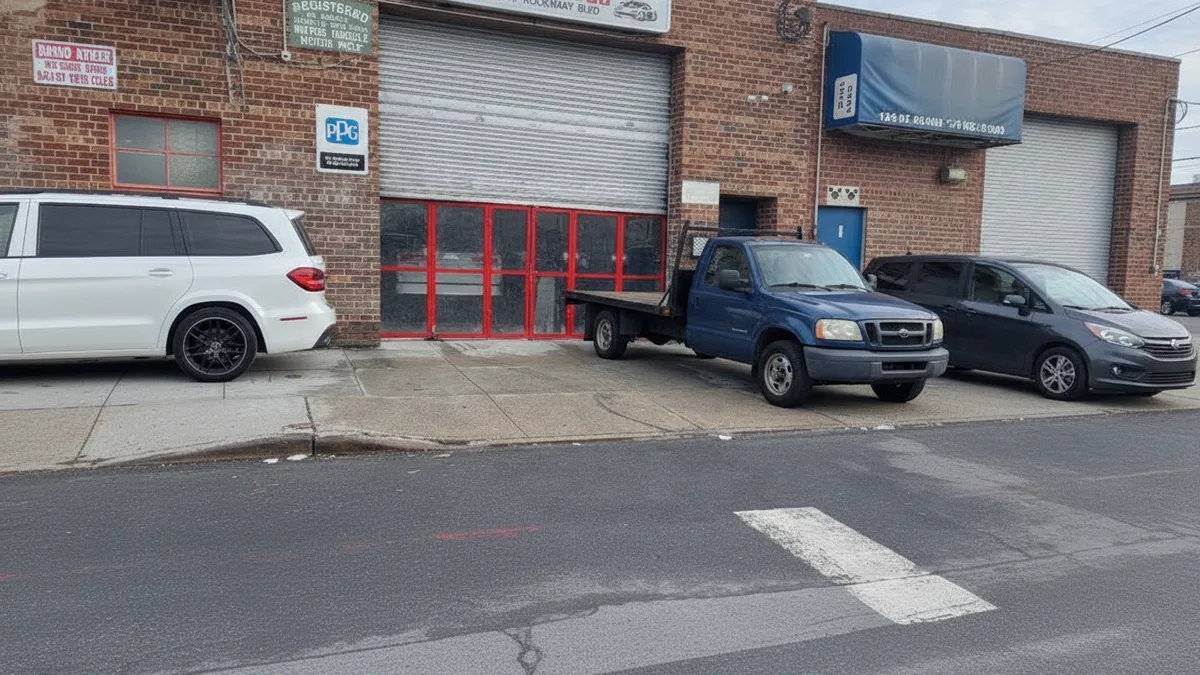
Fleet Auto Body Repair in Queens, NY: Why Commercial Operators Choose Certified Centers
Why Fleet Managers Partner with Certified Body Shops
Fleet managers in Queens, NY, USA choose certified body shops like ANA Auto Repair for fleet auto body repair because certification reduces variables that cause downtime and cost overruns. Certified centers follow documented repair procedures, use trained technicians, and provide written estimates that hold up under insurance review. For a company running multiple vehicles, that consistency translates into fewer surprises and vehicles returning to service faster.
Picture a delivery company running six vans out of South Ozone Park. One gets sideswiped on a Tuesday. A manager without a repair partner spends hours calling shops, comparing quotes, and hoping the estimate matches the final bill. A fleet with an established relationship skips that scramble entirely.
ANA Auto Repair has operated in Queens since 1994. That history matters because commercial accounts need a shop that will still be there next year, not a name that disappears after a rough season.
In our experience, fleets that shop around for the lowest bid on every repair often spend more over time than those who commit to one certified center. Insurance coordination alone, detailed on our insurance partnerships and certifications page, saves fleet managers real administrative hours.
The Cost Advantage of Fleet Repair Partnerships
Money.
That’s the first question every fleet manager asks, and it should be. Fleet vehicles generate revenue when they’re on the road, not sitting in a bay waiting on parts or paperwork. The real cost of collision damage isn’t just the repair invoice; it’s the lost use of the vehicle, the rescheduling of jobs or routes, and the administrative time spent chasing estimates from different shops every time something happens.
Working with a single certified shop for fleet auto body repair changes that math. When ANA Auto Repair handles repairs for a fleet operator, we get to know the vehicles, the typical damage patterns, and the paperwork requirements specific to that business. That familiarity cuts down on the back-and-forth that usually eats up time on a one-off repair. Instead of starting from zero with every visit, we’re picking up where the last job left off.
There’s also the rework problem. A shop that skips proper structural repair procedures or uses a shortcut on paint matching often ends up redoing the job, and that costs the fleet operator twice: once in the original repair time, and again when the vehicle comes back. In our experience, the shops that seem cheapest upfront are sometimes the ones generating the most comebacks. I-CAR certified procedures exist specifically to reduce that kind of repeat work, which matters more to a fleet running multiple vehicles than it does to a single car owner who’s only dealing with damage once every few years.
Insurance disputes are another hidden cost. Fleet operators dealing with commercial policies, or coordinating with insurers like Geico or Allstate on individual vehicle claims, benefit from a shop that documents damage thoroughly and communicates directly with adjusters. Fewer disputes mean fewer delays, and fewer delays mean vehicles get back into rotation faster.
We won’t quote specific savings figures here, because repair costs vary by vehicle type, damage severity, and the terms of each fleet’s insurance coverage. What we can say is that a consistent shop relationship tends to reduce the administrative overhead that comes with juggling multiple vendors. For fleet managers based in or around Queens, NY, USA, that consistency, paired with a shop that’s easy to reach for drop-off and pickup, tends to matter more over a year of operation than any single invoice.
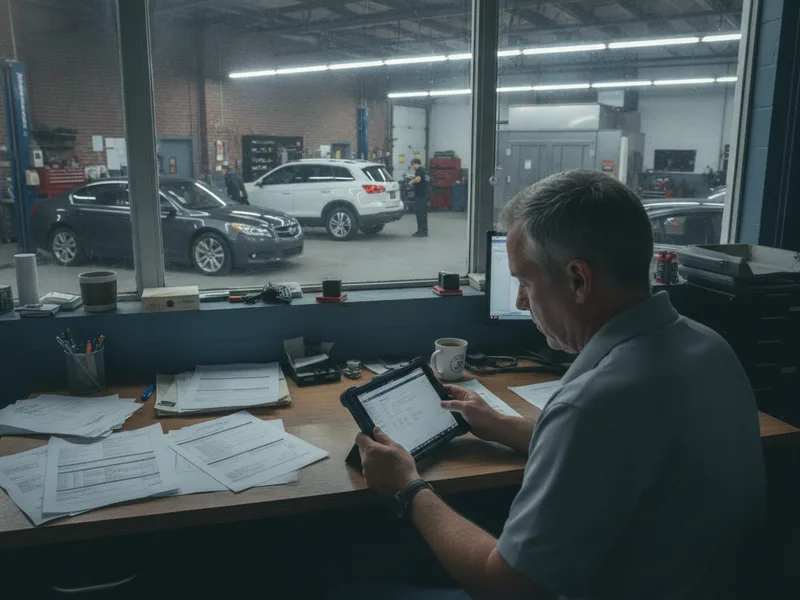
Minimizing Downtime Through Dedicated Fleet Scheduling
Walk into any body shop on a Monday morning and you’ll see the same thing: a lobby full of retail customers waiting for estimates, and somewhere in the back, a fleet vehicle that’s been sitting for three days because nobody prioritized it. That’s the pattern we’ve worked to break.
Fleet vehicles don’t operate on the same clock as personal cars. A commercial van parked in South Ozone Park isn’t just inconvenient; it’s a route that isn’t getting driven and a delivery that isn’t getting made. Certified centers that work with commercial accounts build scheduling systems that treat fleet repairs differently from the start, rather than dropping them into the same queue as everyone else.
Same-day estimates matter more for fleet clients than almost any other part of the process. A quick, accurate damage assessment lets a fleet manager decide fast: repair now, swap in a spare vehicle, or adjust the route. Triage also plays a role here. Not every scratch needs the same attention as frame damage, and sorting that out early keeps minor repairs from getting stuck behind bigger jobs.
Drop-off and pickup coordination is another piece that’s easy to overlook until it’s a problem. Fleets often need vehicles picked up or delivered on a schedule that fits their operation, not the shop’s typical hours. In our experience, the shops that succeed with commercial clients are the ones willing to build flexibility into their intake process instead of insisting fleet customers adapt to a walk-in model.
Clear timeline communication rounds it out. Fleet managers need to plan around a vehicle’s return, not guess at it. ANA Auto Repair has operated in Queens, NY, USA long enough to understand what that planning looks like for local operators, and our background running our Queens shop reflects years of adjusting scheduling practices around real commercial needs, not just retail convenience.
Insurance Claims Made Simple: What Your Fleet Should Expect
Paperwork. That’s what slows fleet claims down more than the actual bodywork does.
Every accident involving a fleet vehicle triggers a claim, and every claim needs documentation that holds up. Adjusters want clear photos, itemized damage assessments, and repair estimates that match what actually gets fixed. ANA Auto Repair handles this directly instead of routing your operations team through a maze of phone calls and follow-ups.
Being recognized as a Geico Xpress repair shop and part of the Allstate good hands repair network means we already work inside the systems these carriers use. That relationship doesn’t guarantee a faster payout on any individual claim, but it does mean the paperwork moves through channels adjusters already recognize, instead of getting flagged for extra review.
Here’s something a lot of fleet managers don’t realize: you’re not required to use whatever shop your insurance carrier suggests. That choice belongs to you. Many people assume the carrier’s recommended list is the only option, but drivers and fleet operators are generally free to select their own repair shop regardless of where a provider points them. It’s worth confirming this directly with your policy provider, since coverage terms vary.
Our team documents damage thoroughly before repairs start, which supports the claim if questions come up later. We also communicate with adjusters directly on repair scope, so your staff isn’t stuck relaying technical details back and forth.
In our experience, the fleets that move through claims fastest aren’t the ones with the simplest damage. They’re the ones working with a shop that already knows how to talk to their carrier. That’s a real advantage worth factoring in when Queens, NY, USA fleet operators choose where to send a damaged vehicle.
Certification and Quality Standards That Protect Your Fleet
Pull a fleet vehicle out of a shop that cut corners on paint prep, and you’ll see the problem within a year: peeling clear coat, mismatched panels, rust creeping in where a seam wasn’t sealed right. We’ve seen it plenty of times on vehicles that came to us for a second repair after another shop’s first attempt didn’t hold up.
Certification isn’t a wall decoration. I-CAR certification means technicians have trained on documented repair procedures rather than guessing their way through a job. For fleets, that consistency matters more than almost anything else, because a repair that doesn’t follow the manufacturer’s structural specs can compromise how a vehicle performs later, even if it looks fine leaving the lot.
Aluminum is where a lot of shops get exposed. Aluminum panels and frames need different welding techniques than steel, and getting it wrong can weaken the repair without any visible sign. An I-CAR certified aluminum welding center follows procedures built for that material specifically, which matters for any fleet running newer vehicles with mixed-metal construction.
Paint quality affects resale value more than most fleet managers expect. A PPG authorized paint center works with a color-matching system designed to get closer to factory finish, which helps avoid the blotchy panel-to-panel mismatch that makes a repaired vehicle obvious on a used lot.
OEM parts compliance is a related issue. Using OEM parts where appropriate can reduce fitment problems and repeat visits, though the right part choice depends on the vehicle, the damage, and what the insurance policy allows. Fleet managers weighing these factors for their own vehicles can start the conversation by reaching out through ANA Auto Repair’s fleet account inquiry page in Queens, NY, USA.
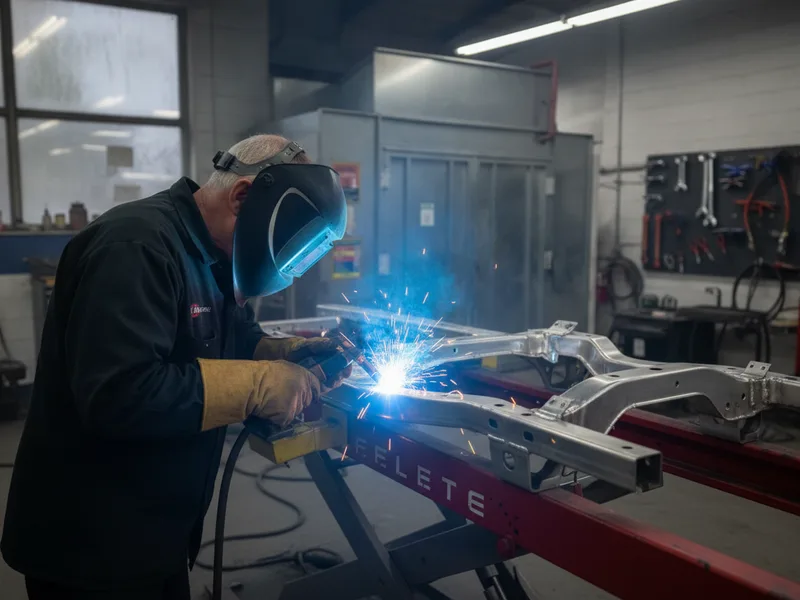
How to Evaluate and Select a Fleet Repair Partner
Picking a shop for one car is easy. Picking one for a fleet is a different job entirely, and treating it the same way is a mistake we see fleet managers make more often than they’d admit.
Start with certifications. Ask if the shop holds I-CAR credentials and what insurance networks they’re part of. A shop with recognized training and established relationships with providers, including Geico Xpress and Allstate’s network, tends to move claims along with less friction. Don’t take a website’s word for it. Ask for proof.
Next, ask about volume. A shop that handles the occasional collision job might struggle once your fleet starts sending vehicles in regularly. Ask directly how they’d handle several vehicles in for repair at once, and whether they can commit to a written fleet agreement instead of a handshake deal. Verbal promises don’t hold up when priorities shift.
Parts and warranties matter just as much as speed. Ask whether they use OEM or aftermarket parts, and get their warranty terms in writing before you sign anything. A shop that hesitates to put a warranty on paper is telling you something, even if they don’t say it out loud.
Location matters too, but not the way most people think. It’s not about finding the closest shop; it’s about finding one that can actually reach and serve your operating area without adding hours to every drop-off and pickup. ANA Auto Repair works with fleets throughout South Ozone Park, Ozone Park, Howard Beach, and the surrounding Queens, NY, USA area, which keeps logistics manageable for operators running routes across those neighborhoods.
Our advice: get two or three quotes, check reviews, and ask hard questions before committing. A short vetting process now saves a lot of headaches later.
ANA Auto Repair: A Trusted Queens Fleet Partner Since 1994
Fleet managers who’ve worked with a handful of shops over the years tend to notice the same thing: the ones still open a decade later are usually the ones that did the work right the first time. Shops that cut corners don’t last, because word travels fast among people who manage multiple vehicles and talk to each other.
ANA Auto Repair has operated in Queens since 1994. That kind of continuity isn’t an accident. It comes from repeat business, and repeat business comes from fleets that trust the work enough to send their vehicles back.
Our shop holds I-CAR certification and I-CAR certified aluminum welding capability, which matters more each year as manufacturers mix steel and aluminum in the same frame. We’re also recognized as a Geico Xpress repair shop and part of the Allstate good hands repair network, so fleets carrying those policies already have an established path through the claims process. For fleets without those carriers, we still provide same day auto repair estimates and detailed damage assessments to keep decisions moving.
Location matters for fleet drop-off and pickup, especially when drivers need to get back on route quickly. Our South Ozone Park location offers convenient access for fleets across Ozone Park, Howard Beach, Lindenwood, South Jamaica, Rochdale Village, Jamaica, and Richmond Hill. Fleet managers weighing their options are welcome to walk in, review our certifications directly, and ask the same questions we’d recommend asking any shop before committing a fleet’s business to it.
Frequently Asked Questions
How much does fleet auto body repair typically cost per vehicle?
Costs depend on how bad the damage is and what kind of repair work each vehicle needs. Fleet operators in Queens, NY who partner with certified shops often see volume discounts, sometimes in the range of 10-20% off standard rates, though the exact number varies by shop and repair type. Ask for a written fleet rate card after your first consultation so you know what to expect before work starts.
Can we negotiate a dedicated fleet account and priority scheduling?
Yes, this is something most certified collision centers set up for regular fleet customers. ANA Auto Repair offers fleet accounts with reserved bay capacity, priority scheduling windows, and a dedicated contact person so you’re not starting from scratch every time a vehicle comes in. Bring your monthly volume numbers and the types of repairs you deal with most often when you sit down to talk terms.
What happens if a repair takes longer than the estimate?
Delays happen sometimes, especially once a technician gets into a vehicle and finds damage that wasn’t visible during the initial estimate. A shop worth doing business with will call you right away and put the reason in writing, not just leave you guessing. Before you sign any fleet agreement, ask about warranty coverage for issues that turn up mid-repair. It’s a fair question, and a good shop will answer it directly.
Does ANA Auto Repair accept all major insurance carriers for fleet claims?
ANA Auto Repair is certified through Geico Xpress and the Allstate Good Hands network, and we work with most major insurance carriers on fleet claims. Coverage details and direct-repair authorization can differ from one carrier to another, so it’s worth confirming with a qualified insurance representative before you finalize anything. Give us a call with your specific carrier list and we’ll walk through what’s already set up on our end.
What parts does ANA use, OEM or aftermarket?
ANA Auto Repair uses both OEM and quality aftermarket parts, and which one gets used usually comes down to the type of damage and what the customer prefers. Fleet operators thinking about resale value or long-term vehicle retention should bring up parts preference early in the partnership conversation. That way, every repair lines up with how you plan to use or eventually sell the vehicle down the road.
Get Your Fleet’s Collision Repair Sorted Out
Managing collision repair for a whole fleet is a different job than handling one car at a time, and it usually goes smoother with a shop that already understands your volume and downtime concerns. If you’re ready to talk scheduling options and get a written estimate, contact ANA Auto Repair in South Ozone Park, Queens, NY, USA. We can walk through how our certified bays handle multiple vehicles and set up a process that fits how your business actually runs.
Call to set up a fleet consultation, or stop by and see the shop for yourself. If your fleet relies on insurance coordination, take a look at who we work with, including our insurance partnerships and certifications to see how claims handling fits into the picture. You can also check out our reviews on Google to see what other fleet owners in the area have said about working with us.