


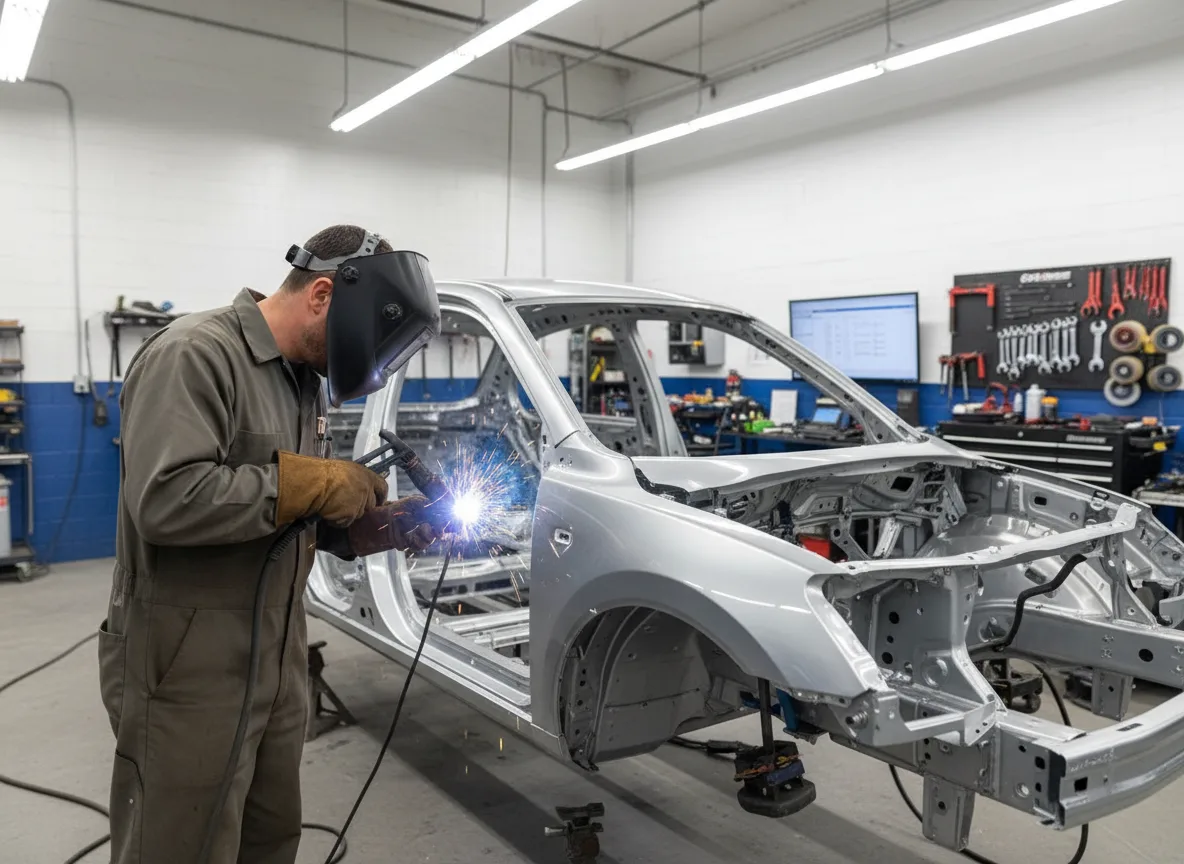
I-CAR Certified Auto Body Shop in Richmond Hill, Queens: Advanced Aluminum Welding & Frame Repair
Why I-CAR Certification Matters for Your Frame Repair
A Richmond Hill driver brought in a Honda CR-V last spring after a side-impact collision on Woodhaven Boulevard. The visible damage looked manageable. What the frame measurement system found underneath told a completely different story: a sub-frame shift of nearly an inch that no visual inspection would have caught. That’s the kind of thing that separates a thorough repair from one that leaves you with a car that handles wrong and safety systems that no longer work as designed.
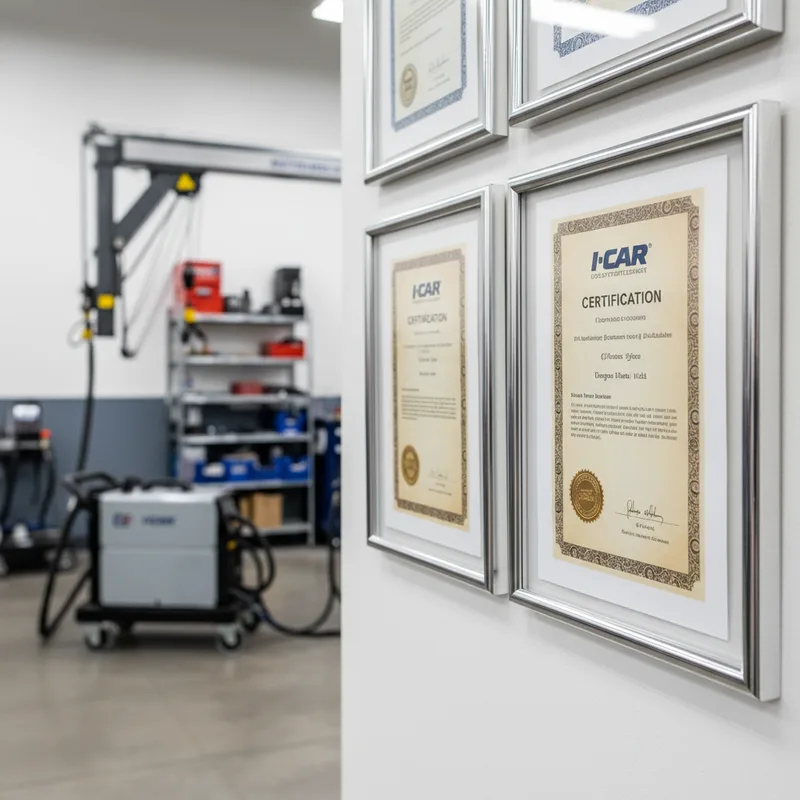
Certification isn’t just a plaque on the wall. I-CAR (Inter-Industry Conference on Auto Repair) is the industry’s recognized gold standard for collision repair training. Technicians earn their credentials through ongoing, role-specific coursework that covers everything from structural repair procedures to the metallurgy of modern high-strength steel and aluminum. The requirements don’t stop after initial certification; shops must maintain training hours year after year to keep their status current.
That ongoing requirement matters more than most people realize. Vehicle construction has changed dramatically over the past decade. Aluminum-intensive platforms, ultra-high-strength steel, and multi-material body structures demand techniques that are genuinely different from what worked on older vehicles. A shop that stopped investing in training five years ago may be applying outdated methods to materials those methods were never designed for.
Being an I-CAR certified auto body shop is not a common designation. Many shops in Queens and throughout the metro area operate without it. At ANA Auto Repair, we’ve held that certification alongside our I-CAR aluminum welding credentials since well before it became a topic customers regularly asked about. Our shop has been doing this work since 1994, and the training culture here has always run parallel to the technical work itself.
One piece of advice worth pushing back on: don’t take a shop’s word for certification status. Ask to see documentation, and verify it directly through I-CAR’s database. A verbal claim costs nothing. Verified credentials mean the shop has put in the time and passed the assessments.
Drivers from Richmond Hill, Queens deserve the same repair quality as anyone else in this region. Whether the damage is a bent rail or a compromised unibody section, the standards don’t change based on your zip code. You can reach us directly for a same-day estimate from our South Ozone Park location.
Aluminum Welding: The Modern Challenge in Auto Body Repair
Aluminum is everywhere now. Ford’s F-150, the Audi A8, Tesla’s Model S, the Range Rover Sport. Automakers switched because aluminum cuts vehicle weight significantly, which improves fuel economy and helps meet federal emissions targets. That shift created a serious problem for body shops that never updated their equipment or training.
Steel and aluminum do not behave the same way under heat. Not even close.
Steel is relatively forgiving. It tolerates higher welding temperatures, and a technician with decent skill can produce a structurally sound weld even with modest equipment. Aluminum melts at a lower temperature, conducts heat much faster, and oxidizes almost immediately when exposed to air. That oxide layer on the surface has a higher melting point than the aluminum underneath it, which means if you approach an aluminum weld the same way you’d approach steel, you’re likely fusing the oxide layer while the base metal underneath is still cold or, worse, already overheated.
The result isn’t always obvious to the naked eye. A weld can look clean on the surface and still be porous or brittle underneath. Under normal driving conditions, that might hold. Under stress from another impact, sudden braking, or even hitting a pothole on a rough stretch of Cross Bay Boulevard, a compromised aluminum weld can fail at the worst possible moment.
This is one area where I’d push back on the common assumption that any certified shop can handle aluminum. General I-CAR certification covers a wide range of repair procedures, but aluminum welding specifically requires dedicated training and equipment that goes beyond standard coursework. As an I-CAR certified auto body shop and a recognized aluminum welding center, ANA Auto Repair has gone through that additional process because aluminum repair done wrong creates liability, not just cosmetic problems.
Proper aluminum repair requires a dedicated welding environment. Cross-contamination between steel particles and aluminum can cause corrosion that weakens the repair over time. Tools used on steel cannot be used on aluminum without thorough cleaning or, ideally, complete separation. Most shops don’t maintain that separation because it requires investment in duplicate equipment and strict shop discipline.
Drivers in Richmond Hill, Queens who own newer vehicles with aluminum-intensive construction need to ask a direct question before authorizing any frame or structural repair: Is your shop specifically certified for aluminum welding? “We can handle it” is not the same answer as a verifiable certification.
The I-CAR Gold Class and aluminum welding designations exist precisely because the industry recognized this gap. Not every shop has closed it.
Frame Damage: What Hides Beneath the Surface
Collision damage rarely tells the whole story on the outside. A vehicle that looks like it absorbed a moderate hit can have significant structural distortion you simply can’t see with a visual inspection alone. That gap between what’s visible and what’s actually happening in the frame is where safety problems get missed.
Frame damage falls into several categories. Sag, mash, twist, and diamond distortion each affect different structural planes, and they don’t always occur in isolation. A rear-end impact, for example, can send force forward through the unibody and displace mounting points well away from the point of contact. Drivers in Richmond Hill who commute through the tight intersections along Woodhaven Boulevard know how quickly a collision can happen, and the resulting damage rarely stays confined to one area.
The only reliable way to find hidden damage is with a three-dimensional measuring system that compares actual frame geometry against manufacturer specifications. At an I-CAR certified auto body facility, that measurement process isn’t optional. It’s built into the repair protocol. Technicians pull precise data points from the vehicle and identify deviations that might be a fraction of an inch off. That fraction matters.
Here’s where a lot of shops make a quiet mistake. They repair visible damage, verify it looks right, and skip a final alignment check before reassembly. A vehicle can appear properly repaired and still track off-center, wear tires unevenly, or handle poorly under hard braking. We think that “close enough” standard is genuinely dangerous, and we don’t apply it.
Modern vehicles add another layer of complexity. Advanced safety systems like automatic emergency braking and lane departure warnings rely on sensors calibrated to the factory frame geometry. If the frame shifts even slightly and isn’t corrected, those systems can give false readings or fail to trigger when needed.
Thorough frame diagnosis takes time. It also takes equipment and the training to interpret what the data is actually saying. Our team at ANA Auto Repair, based in South Ozone Park and proudly serving Richmond Hill, has been doing exactly that since 1994.
Common Frame Repair Mistakes That Compromise Safety
Some shops cut corners. It happens more than most people realize, and the consequences can follow a driver for years after the repair is complete.
Here are the mistakes we see most often, and why each one matters:
-
Skipping proper surface preparation. Inadequate prep work before welding or bonding is one of the most common failures in structural repair. Contaminated surfaces produce weak welds that look fine visually but won’t hold under real-world stress. An I-CAR certified auto body technician follows verified prep procedures for a reason.
-
Missing subsurface frame damage. A shop that relies on a visual inspection alone will miss distortion hiding underneath. Without computerized measuring equipment, bent subframe rails and misaligned mounting points go undetected and unrepaired.
-
Skipping the post-repair alignment check. Frame work changes the geometry of a vehicle. If no one checks alignment after the repair, the car will pull, wear tires unevenly, and handle unpredictably. This step gets skipped more than it should.
-
Ignoring safety system recalibration. This one surprises people. Modern vehicles rely on cameras and sensors for lane assist, automatic emergency braking, and adaptive cruise. Collision work shifts those systems out of spec. Skipping recalibration doesn’t just void a warranty feature; it creates a genuine safety hazard.
Honestly, the idea that a low estimate saves money is worth questioning. A repair done without proper alignment checks or sensor recalibration often costs more to fix correctly the second time around.
Drivers coming to us from Richmond Hill, Queens know that we don’t skip steps. Our team has been doing this since 1994, and that track record didn’t happen by rushing jobs out the door.
Serving Richmond Hill and the Broader Queens Community
Most of the vehicles we see from Richmond Hill come in after collisions on Woodhaven Boulevard or the cross streets feeding into Jamaica Avenue. The traffic patterns out here produce a predictable mix of rear-end hits, intersection impacts, and side-swipe damage.
We’re based in South Ozone Park, not Richmond Hill itself. But the distance is short, and we’ve been working with drivers from this neighborhood for years. Richmond Hill customers get the same I-CAR certified auto body repair process as every vehicle that comes through our doors, no exceptions.
Proximity to Little Guyana means we see a lot of multi-vehicle household situations where people are weighing repair costs carefully. We get it. That’s exactly why we offer same-day written estimates and walk every customer through what the frame diagnostics actually show before any work begins.
A lot of shops will tell you to just go with whoever your insurer recommends. That’s advice worth questioning. You have the right to choose your own shop, and certification matters. We work directly with Geico and Allstate, so the claims process stays straightforward regardless of which shop you pick.
Reach out to schedule your estimate. We’ll handle the rest.
What to Expect During Your Frame Repair Process
The process is straightforward, but each step matters. Skipping or rushing any one of them is how a vehicle ends up back in the shop six months later with new symptoms from an old problem.
Here’s how a typical frame repair moves through our facility when we’re working with a Richmond Hill customer:
Step 1: Damage Assessment
We start with a full structural measurement using computerized frame equipment. Visual inspection alone misses too much. We document every deviation from factory specifications before any work begins, which also gives you a clear baseline for the repair estimate. You can schedule your same-day estimate and we’ll walk you through what the measurements show.
Step 2: Written Estimate and Insurance Coordination
We put everything in writing. A shop that won’t do that is a shop worth walking away from. If you’re filing a claim, we work directly with your provider. As a Geico Xpress and Allstate Good Hands partner, we handle the paperwork so you’re not stuck in the middle.
Step 3: Welding and Structural Repair
This is where I-CAR certified auto body training separates quality shops from the rest. Aluminum components require specific wire and heat protocols. Steel sections follow their own procedures. Our technicians work to manufacturer specifications throughout, not shop approximations.
Step 4: Alignment Verification
Pull. Don’t assume the frame is straight because it looks straight. We re-measure after every significant repair to confirm the geometry matches factory specs before the vehicle moves anywhere near paint.
Step 5: Safety System Recalibration
Modern vehicles have sensors tied into the structural system. Lane assist, automatic emergency braking, blind spot monitoring. These all need recalibration after frame work, full stop. Many shops skip this. We don’t.
Step 6: Final Inspection
Every repair gets a final review before delivery. Thirty years of doing this work in Queens has taught us that thoroughness at the end of a job is what earns the next one. Richmond Hill drivers deserve the same standard we hold ourselves to every day.
Frequently Asked Questions
What does I-CAR certification mean for auto body shops?
I-CAR stands for Inter-Industry Conference on Auto Collision Repair. When a shop carries I-CAR certification, it means the technicians have gone through rigorous, ongoing training in collision repair techniques, materials, and safety standards. It’s not a one-time credential. Certified shops also meet strict equipment and facility requirements and keep up with how vehicles are evolving. If you’re looking for an i-car certified auto body shop in Richmond Hill, Queens, NY, USA, that certification is your signal that the work is being done to a professional standard.
Why is aluminum welding different from steel welding?
Aluminum and steel behave very differently under heat. Aluminum needs lower heat input, specialized equipment, and a different technique altogether. It’s more prone to cracking if the process isn’t handled correctly, and a bad weld creates structural weakness that can fail when you need the vehicle to protect you most. That’s why I-CAR aluminum welding certification matters. At ANA Auto Repair, our certified technicians have the specific training and tools required to weld aluminum properly, not just adequately.
How do you detect hidden frame damage after a collision?
Hidden frame damage is one of the trickier parts of collision repair because it often doesn’t show up on the surface. Our technicians use frame racks with precise measuring systems to pull exact dimensions and compare them against the manufacturer’s factory specifications. Even small deviations in alignment can affect how your vehicle handles and how well it protects you in a future accident. A thorough visual inspection combined with that diagnostic equipment gives us a complete picture of what’s actually going on under the panels.
Do you serve customers in Richmond Hill, or only South Ozone Park?
Our shop is located in South Ozone Park, but we regularly serve customers from Richmond Hill, Queens, NY, USA and throughout the surrounding Queens area. Getting to us is straightforward, and once you’re here, you’ll have access to the same i-car certified auto body services, including aluminum welding and frame repair, that our local customers rely on. Don’t let the address stop you from coming in for an estimate.
What happens to my car’s safety systems after frame repair?
This is a step that a lot of shops skip, and it can cause real problems. Modern vehicles rely on precise frame geometry to keep safety systems like lane assist and automatic emergency braking working correctly. Sensors need to be calibrated to factory specs after any frame repair, otherwise those systems can give false readings or fail to respond when you need them. At ANA Auto Repair, recalibration is part of the process, not an afterthought. We make sure your vehicle leaves the shop the way it’s supposed to function.
Get Your Frame Repair Done Right at ANA Auto Repair in Richmond Hill, Queens, NY
If your vehicle has suffered structural damage, our I-CAR certified technicians are ready to assess it thoroughly and give you a same-day estimate, so you’re never left guessing about what comes next. We’ve been handling frame and aluminum welding repairs for drivers across Richmond Hill and all of Queens since 1994, and we stand behind every repair we do. See what our customers are saying on Google and then stop by or give us a call today to get your vehicle back on the road safely.