


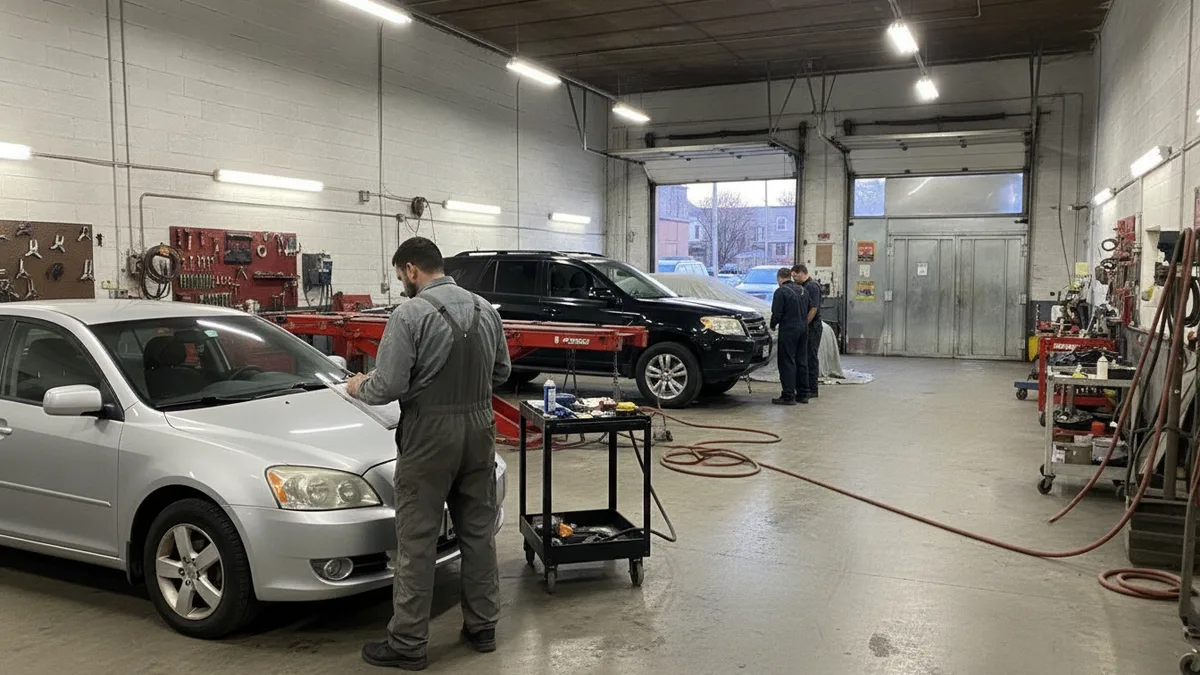
Red Flags to Avoid When Selecting an Auto Body Shop in Queens, NY
What Are the Main Red Flags at an Auto Body Shop?
The main red flags to avoid when selecting an auto body shop include verbal-only estimates, no written warranty, unusually low bids, pressure to sign paperwork fast, and vague answers about parts or repair timelines. Drivers in Queens, NY, USA who spot these signs during a shop visit should treat them as reasons to keep looking rather than settle. ANA Auto Repair, an I-CAR certified collision repair center, built its approach around avoiding exactly these shortcuts.
Picture this. Your car gets hit in a parking lot in Ozone Park, and you’re now calling around for estimates.
One shop quotes you over the phone and won’t put anything in writing. Another hands you a number so low it doesn’t match the visible damage. Neither is a good sign. In our experience, shops that avoid written documentation usually do so because the final bill won’t match what they told you at first.
A trustworthy shop welcomes questions about OEM versus aftermarket parts, explains its process, and doesn’t rush you toward a decision. If you’re weighing a repair right now, reaching out through ANA’s request a collision repair estimate page is a solid way to get a written quote to compare against others.
Verbal Estimates and Lack of Written Documentation
Here’s a simple test. Ask a shop for a written estimate. If they hesitate, or just toss out a number over the phone and expect you to trust it, walk away.
A verbal quote protects nobody. Once your car is on the lift and panels come off, “hidden damage” has a way of appearing, and without paper backing up the original number, you have no ground to stand on. We’ve had customers come to us after starting work elsewhere, only to get hit with charges that had nothing to do with what they were originally told. That’s not a coincidence. It’s what happens when there’s no written record to hold anyone accountable.
A written estimate should spell out the labor involved, the parts needed, and whether those parts are OEM or aftermarket. It should also give you a real basis for comparison. You can’t stack one shop’s quote against another’s if one is a scribbled note and the other is a handshake. Getting everything on paper is one of the most basic ways to avoid the red flags to avoid when selecting an auto body shop that end up costing drivers time and money.
Some shops will tell you a written estimate takes too long or isn’t necessary for “simple” jobs. In our experience, that’s rarely true. Even minor dent or scratch repair takes only a few minutes to document properly, and any shop that treats a written estimate as an inconvenience is telling you something about how they’ll handle the rest of the job.
ANA Auto Repair has offered same day auto repair estimates in writing since 1994, and drivers throughout Queens, NY, USA, including neighbors in South Ozone Park, Ozone Park, Richmond Hill, South Jamaica, and Jamaica, are welcome to stop by our South Ozone Park location for a straightforward look at what a repair actually involves. Walk-ins are always welcome, and you’re never obligated to commit on the spot.
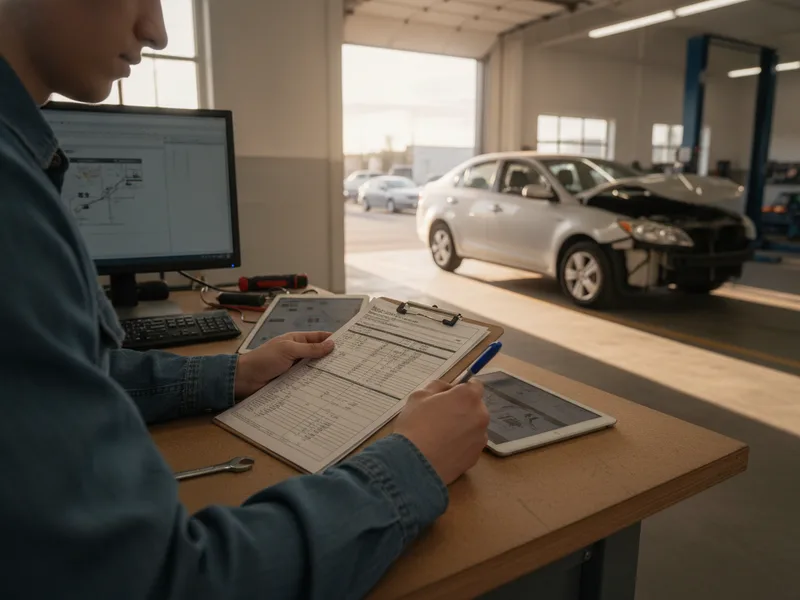
Suspiciously Low Bids and Pressure to Decide Quickly
Every estimator has seen it: a customer walks in holding a quote that’s hundreds less than everyone else’s, confused about why. In most cases, the answer isn’t a better deal. It’s a shop planning to cut corners on materials, skip steps in the paint process, or pad the bill later with “unexpected” charges once your car is already torn apart.
Low bids work because they play on a simple instinct. Nobody wants to overpay for collision repair. But a quote that sits far below every other estimate you’ve collected usually means something is missing, whether that’s proper surface prep, OEM parts, or the labor time actually required to do the job to factory specification. Real shops in Queens, NY, USA price their work based on the parts, paint materials, and hours a repair genuinely takes. That pricing tends to fall within a reasonable range of competitors, not dramatically under it.
Pressure tactics deserve the same suspicion. If someone’s pushing you to sign an authorization form on the spot, before you’ve had a chance to read it or compare it against another quote, that’s worth pausing over. Rushed decisions are how people end up locked into repairs they don’t fully understand, sometimes with fewer warranty protections than they realized.
In our experience, the shops worth trusting are the ones willing to let you walk out the door with paperwork in hand and think it over. Reputation and longevity say something too. ANA Auto Repair has been doing this work since 1994, and our background in certified collision repair is available for anyone who wants to check credentials before committing. Taking a day to compare offers costs you nothing. A rushed, underpriced repair can cost quite a bit more down the road.
Watch Out for These Common Shop Problems
Beyond the estimate and the pressure tactics, a handful of other warning signs show up again and again. Here’s a checklist we’d hand a friend or family member before they drop off a car anywhere in Queens, NY, USA.
-
No certifications on display. A legitimate shop should be able to show you I-CAR or ASE credentials without a fuss. If nobody on staff has formal training, that’s a problem, especially on newer vehicles with aluminum panels or advanced safety systems.
-
Dodging questions about parts. Ask whether they use OEM or aftermarket parts and watch how they respond. A shop that won’t give you a straight answer is one to think twice about.
-
No warranty in writing. Quality work comes with a guarantee behind it. If a shop offers nothing on paper, there’s no real accountability once you drive off the lot.
-
Thin or suspicious reviews. Reputation matters. A pattern of complaints about unfinished work or ignored calls tells you more than any sales pitch will.
-
Vague timelines. “We’ll get to it eventually” isn’t an answer. Reasonable shops can give you a general window, even if delays happen.
One thing folks often miss: your insurance company can suggest a shop, but you’re not required to use it. That choice is yours. We’ve been doing this work since 1994, and the shops that last are the ones that don’t cut corners on any of the items above.
How to Verify Credentials and Build Trust in Queens
Most drivers never ask a body shop to prove anything. They see a sign, a clean waiting room, maybe a friendly face at the counter, and assume the work behind the scenes matches. In our experience, that assumption causes more disappointment than any other single mistake people make when choosing a shop.
Certifications matter because they’re earned, not printed. I-CAR certification means technicians have trained on current repair procedures, including the kind of aluminum welding work that older shops often can’t touch. A shop that’s also an authorized PPG paint center has met standards for color matching and finish quality that a generic paint booth setup can’t guarantee. Ask to see the certificates. A shop confident in its training won’t mind showing you.
Insurance relationships tell a similar story. A shop recognized by major carriers, including designations tied to specific direct repair programs, has typically gone through a vetting process most independent garages skip. That doesn’t mean an uncertified shop can’t do good work, but it does mean there’s less independent verification behind their process. Drivers curious about which carriers a shop works with can review a shop’s insurance partnerships directly rather than taking a verbal claim at face value.
Reputation takes longer to fake than a certificate. A shop that’s operated in Queens, NY, USA since 1994 has survived decades of changing car models, insurance rules, and neighborhood turnover. That kind of longevity usually means steady repeat business and word of mouth, not just a lucky location.
Reviews help too, though read them with some skepticism. A handful of five-star posts from the same week means less than a steady pattern of feedback over years. If you’re unsure how to weigh a shop’s claims against its actual track record, a quick conversation with a state consumer protection office or your insurance agent can offer an outside perspective before you commit.
Getting Multiple Quotes and Comparing Apples to Apples
Get two or three written estimates before you decide anything. That’s it. That’s the advice.
Here’s why it matters. One shop might quote a full repair. Another might quote a partial one, leaving out corrosion protection or paint blending on adjacent panels. If you’re only comparing the bottom-line number, you’re not actually comparing anything. You’re guessing.
When you sit down with each estimate, look for the same categories on every page: parts (and whether they’re OEM or aftermarket), labor hours, paint and materials, and any frame or alignment work. Ask each shop directly whether their number includes everything needed to return the car to pre-accident condition, or if it’s a starting point that could grow once they open things up. A shop that gets defensive about that question is telling you something.
In our experience, drivers sometimes assume the shortest, simplest estimate is the safest choice. It’s usually the opposite. Estimates that skip line items aren’t leaner, they’re incomplete, and the gaps tend to surface as “extra” charges later. A little inconsistency in formatting is normal; missing whole categories of work is not.
Ask each shop the same set of questions: what warranty applies, how long the repair should reasonably take, and what happens if they find additional damage once they start. Consistent, confident answers across the board are a good sign. Vague or shifting answers are one of the more common red flags to avoid when selecting an auto body shop in Queens, NY, USA.
If you’d rather skip the guesswork, ANA Auto Repair offers walk-in estimates at our South Ozone Park location, and we’re glad to explain every line item in plain terms.
Frequently Asked Questions
Can I choose my own auto body shop if my insurance has a preferred repair network?
Yes, in most cases you can pick any licensed shop you want, even if your insurance company has a list of “preferred” shops. Insurers can’t legally force you to use their network in New York. Those preferred lists exist mostly for the insurer’s convenience, not yours. Before you schedule anything, call your insurance agent and confirm your policy’s specific rules, since coverage details can vary.
What should I look for in a warranty when choosing a body shop?
A solid warranty should be in writing and cover paint, structural repairs, and replacement parts, not just verbal promises. Ask if it covers labor as well as materials, and get a clear answer on the length, whether that’s one year or five. Find out what voids the warranty too. If a shop hesitates to put any of this on paper, take that as one of the red flags to avoid when selecting an auto body shop.
Why do some body shops push OEM parts while others recommend aftermarket?
OEM parts come straight from your vehicle’s manufacturer, so they fit exactly right but cost more. Aftermarket parts are made by other companies and usually cost less, though fit and durability can vary depending on the brand. A shop that’s upfront with you will walk through both options, explain how each affects cost and appearance, and let you make the call based on your budget and what your insurance will cover.
What questions should I ask a body shop before dropping off my car?
Start by asking how long the repair will actually take, not just a rough guess. Get their warranty terms in writing, and ask directly whether they plan to use OEM or aftermarket parts on your vehicle. Find out how they’ll keep you updated, by phone, text, or email, and ask what happens if they find additional damage once they take the car apart. A shop in Queens, NY that answers these clearly is usually one worth trusting.
How important is an I-CAR certification when choosing a collision repair center?
I-CAR certification means the technicians working on your car have gone through structured training on current repair methods, including aluminum panels and unibody frame work that older techniques can’t handle safely. It doesn’t guarantee perfection, but it’s a good sign the shop keeps up with how vehicles are actually built today. For any structural or safety-related repair, it’s reasonable to ask to see proof of certification before you agree to the work.
Get a Straight Answer on Your Collision Repair
Body work after an accident is stressful enough without wondering if the shop doing it knows what it’s doing. ANA Auto Repair has been fixing cars in Queens, NY, USA since 1994, and our I-CAR certification along with our insurance partnerships mean the repair process gets handled the right way from the start.
Stop by our South Ozone Park shop or request a free written estimate for your collision repair. If you’d rather hear from folks who’ve already been through the process, check out our reviews on Google before you decide.