


Professional Bumper Repair and Replacement: What Jamaica, Queens Drivers Need to Know
Repair vs. Replacement: How to Tell What Your Bumper Needs
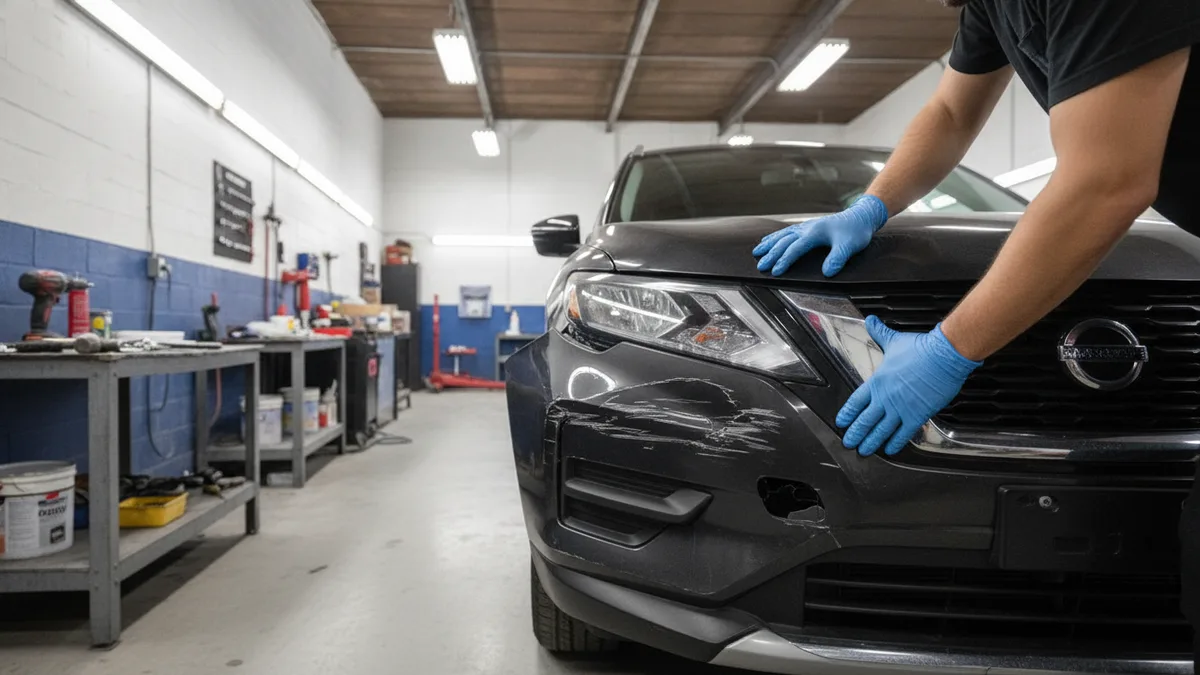
Whether a bumper can be repaired or needs full replacement depends on four factors: the depth and spread of the dent, whether the paint or plastic substrate has cracked, whether the mounting brackets or reinforcement bar behind the bumper have shifted, and how the panel lines up with adjacent body parts. ANA Auto Repair evaluates these factors for drivers throughout Jamaica, Queens, NY, USA using the same inspection standards applied at every job we take on. Since 1994, that process hasn’t changed much, even as bumper materials have.
Picture a driver in Jamaica who backs into a low concrete post in a parking lot. The bumper cover shows a shallow dent, no cracking, and the car still tracks straight. That’s usually a repair scenario: heat, pull the plastic back into shape, sand, and refinish. Now picture a different scenario, a rear-end collision at a stoplight. The bumper cover has buckled, there’s a visible gap where it meets the fender, and the trunk doesn’t close flush anymore. That’s a replacement conversation, because the underlying reinforcement bar has likely absorbed impact it wasn’t built to bounce back from.
What We Look For
-
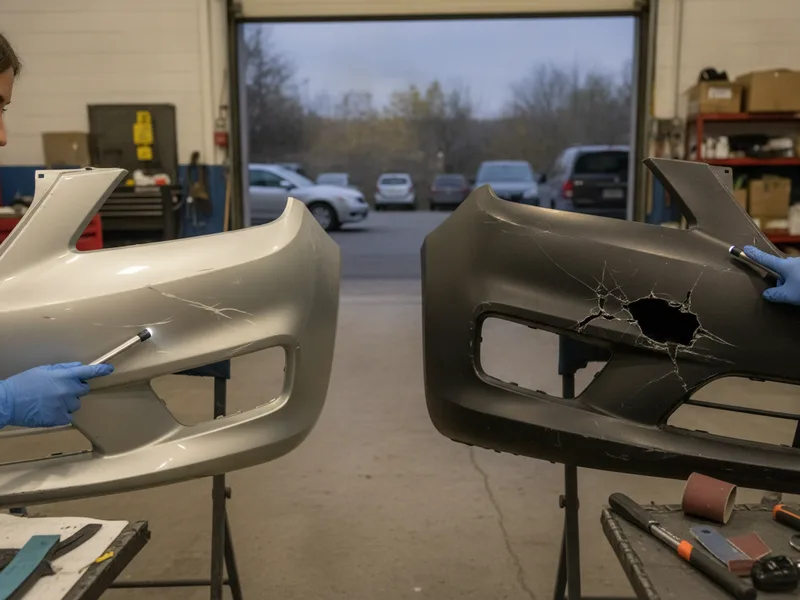
Dent depth and creasing: Shallow, wide dents in plastic typically respond to heat and reshaping. Sharp creases or spiderweb cracks usually don’t.
-
Paint and substrate condition: Surface scuffs are cosmetic. Cracks that go through the plastic mean the material has lost integrity.
-
Structural components behind the cover: The energy absorber and reinforcement bar matter more than the cover itself. Bent or fractured brackets are a strong signal that repair alone won’t restore the bumper’s original function.
-
Panel alignment: Gaps, misaligned trim, or a bumper that sits crooked against the headlights or fenders point toward replacement rather than a cosmetic fix.
In our experience, a lot of online advice oversimplifies this into “small dent, easy fix.” That’s not always accurate. A small dent directly over a sensor mount or parking assist bracket can require more disassembly than a larger cosmetic dent elsewhere on the panel, so the location matters as much as the size. A written, itemized estimate helps clarify which path applies to a specific vehicle, and it’s something a driver should always ask for before authorizing work. For a full look at what’s involved in diagnosing and restoring bumper damage, ANA Auto Repair’s collision and auto body service overview outlines the broader capabilities available to drivers across Queens, including those in Jamaica.
The Bumper Repair Process: What Happens After Drop-Off
Drivers ask us this a lot. Once your car is in the shop, what’s actually happening back there? Here’s the honest walkthrough, no jargon.
The first step is documentation. A technician photographs the damage from multiple angles and notes anything hidden underneath, cracked clips, bent brackets, a damaged reinforcement bar. This record matters for the repair plan and for insurance purposes, so it’s not a step anyone should skip.
Next comes disassembly, if the bumper cover needs to come off. Some scuffs and shallow dents can be treated without removing anything. But if there’s damage to the bar behind the cover or wiring for sensors and lights, the whole assembly usually needs to come apart. This is where a lot of estimates change once the shop sees what’s under the surface. We tell customers in Jamaica, Queens, NY, USA the same thing we tell everyone locally: an initial estimate is a starting point, not a final number, until the tech has eyes on the full picture.
For dent removal, the technique depends on the material and the severity. Minor dents on flexible plastic bumpers often respond well to paintless dent repair (PDR), which massages the plastic back into shape without disturbing the paint. Deeper damage usually calls for filler work, sanding, and reshaping. Aluminum components are a different animal entirely; they require specialized welding techniques and I-CAR certified training to restore structural integrity without weakening the metal. This is one area where cutting corners shows up fast, sometimes years later.
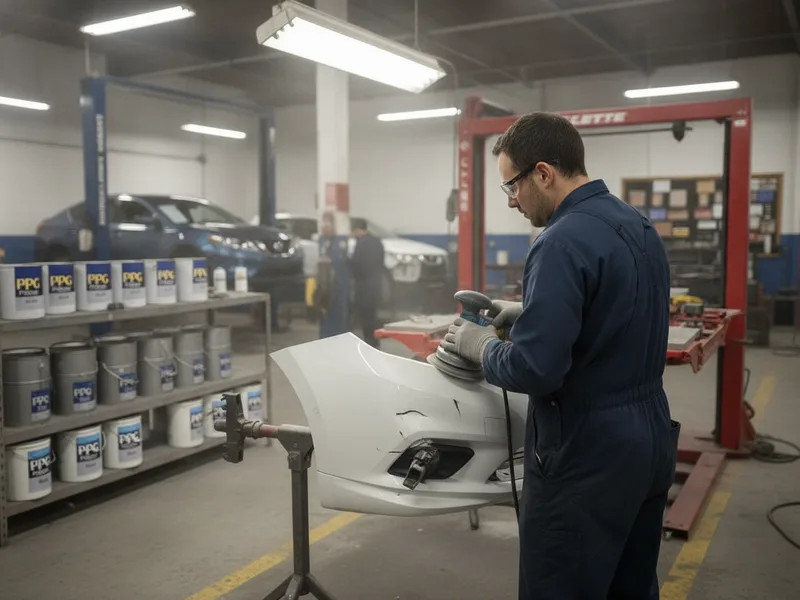
Surface prep is the unglamorous part that determines how good the final paint job looks. Sanding, priming, and cleaning the surface takes time, and rushing it is a common shortcut some shops take to save an hour or two. In our experience, that hour saved almost always shows up later as a rough patch or uneven texture.
Paint matching is where a PPG authorized paint center earns its keep. Factory colors shift slightly by production year and even by panel, so getting a seamless blend takes more than eyeballing a color chip. Digital color matching systems help, but a trained eye still checks the result against the vehicle in natural light before it’s called done.
How long does all this take? It varies. A simple PDR job might wrap up in a day. A bumper needing disassembly, filler, aluminum repair, and a full paint match takes longer, sometimes several days, depending on parts availability and how busy the shop is. Anyone quoting an exact turnaround before inspecting the damage in person is guessing, not measuring.
Bumper Replacement Timeline and Cost Considerations
One pattern shows up on almost every estimate sheet: two bumpers with nearly identical damage can land at very different price points once you factor in the make of the car and what color it needs to match. A technician can eyeball a dent in five minutes, but pricing it out takes longer because so many variables feed into the final number.
Cost swings mainly on three things. Vehicle make matters because some manufacturers price their bumper covers and sensors well above others. Paint matching complexity matters too; metallic and pearl finishes take more skill and material than a basic solid color. Parts availability plays a role as well, since a bumper that has to be special-ordered will add time and often cost compared to one sitting on a local supplier’s shelf.
Labor hours follow a similar logic. A straightforward repair with no sensor recalibration might take a shop a fraction of the time that a full replacement involving parking sensors, brackets, and multiple paint coats requires. Turnaround also depends on how backed up a shop’s paint booth is that week, so any timeline a shop gives should be treated as an estimate, not a fixed promise.
OEM parts (made by the original manufacturer) generally cost more than aftermarket alternatives, and there’s a reason for that price gap. OEM pieces are built to the exact factory spec, which usually means a tighter fit and more predictable long-term durability. Aftermarket parts can be a reasonable option for some repairs, but fit and finish vary by supplier, so it’s worth asking your shop which option they recommend for your specific vehicle and why.
Drivers in Jamaica, Queens, NY, USA sit close enough to our South Ozone Park shop that drop-off and pickup logistics rarely add much to the overall timeline. We treat estimates for customers throughout the service area the same way we do for anyone else, with the same attention to detail. For a closer look at the certifications and insurance partnerships that shape how we price and schedule jobs, our background on training and credentials page lays it out. If a cost estimate seems unusually low or vague, it’s reasonable to ask a qualified technician for a second opinion before committing.
Common Red Flags That Signal Full Replacement Is Necessary
Some damage just isn’t worth fighting for. We’ve seen plenty of drivers in Jamaica, Queens, NY, USA try to save money by patching a bumper that should’ve been replaced from the start. It usually costs more in the long run.
Here’s what tells us a repair attempt would be a waste of your money.
-
Cracks at the mounting points. The plastic tabs and clips that hold your bumper to the frame are small but critical. Once they crack, the bumper won’t sit securely no matter how well the cosmetic damage gets fixed.
-
Misalignment that affects panel fit. If the bumper is pulling away from the fender or hood, or the door gaps look uneven, something behind the bumper has likely shifted or bent. Painting over that problem doesn’t solve it.
-
A damaged impact absorber. The foam or honeycomb structure behind the cover is there to manage crash energy. Once it’s crushed or torn, it can’t do that job the same way again, and there’s no reliable way to restore it.
-
Material breakdown from age or sun exposure. Plastic gets brittle over years of UV exposure and temperature swings. A bumper that’s already chalky or thin from age often cracks further during any repair attempt, even a careful one.
Most guides tell drivers that any dent under a certain size is automatically repairable. In our experience, that’s not quite right. A small crack near a mounting bracket can matter more than a larger dent in open plastic. Size alone doesn’t tell the whole story.
If you’re weighing bumper repair and replacement options on a vehicle showing any of these signs, get a second look before committing to a fix. A technician who inspects the bracket and absorber, not just the visible surface, will give you a far more accurate picture of what your car actually needs.
Insurance Coverage for Bumper Damage in Queens
Most drivers only find out how their policy actually works after they’ve already hit something. That’s the wrong time to learn it, but it’s when it happens for almost everyone we see.
Bumper damage typically falls under collision coverage if you hit another vehicle or object, and comprehensive coverage if the damage came from something like a fallen object, theft, or weather event. Both come with a deductible, meaning you’ll pay a set amount out of pocket before your insurer covers the rest. If your deductible is close to the total repair cost, paying out of pocket sometimes makes more sense than filing a claim at all. That’s a decision worth running by your agent, since filing history can affect premiums down the road.
Here’s something a lot of Jamaica, Queens, NY, USA drivers don’t realize: you are not required to use the shop your insurance company recommends. New York law gives you the right to choose your own repair shop, regardless of what a claims rep suggests first. Insurers may steer customers toward “preferred” networks because it’s convenient for them, but the choice is legally yours. Working with an adjuster goes smoother when you come prepared. Bring your written estimate, take photos of the damage before any repair work starts, and keep a copy of your claim number handy for reference.
Documentation That Helps Your Claim
-
Photos of the damage from multiple angles, taken as soon as possible
-
A written repair estimate from a licensed shop
-
Your policy number and the claim number assigned by your insurer
-
A police report, if the damage involved another vehicle or a reported incident
Coverage details vary by policy and insurer, so it’s worth confirming specifics with your agent before assuming what’s included. If you’re weighing a claim against an out-of-pocket repair, our team can walk through the estimate with you, and scheduling a visit or requesting a quote is simple through our easy online scheduling and estimate request page.
Choosing the Right Shop: What Sets a Quality Repair Apart
Do your homework first. Picking a body shop on price alone is how drivers end up back in the same seat six months later, paying twice for one repair.
Start with certifications. A shop holding I-CAR training and ASE-certified technicians has proven its people know current repair standards, not just guesswork passed down from one mechanic to the next. ANA Auto Repair is I-CAR certified and a PPG authorized paint center, which matters for anyone whose bumper needs a factory-accurate finish rather than a close guess. Ask any shop you’re considering whether they hold similar credentials, and don’t be shy about it. A reputable shop will answer without hesitation.
Get quotes in writing. Two or three estimates give you a real basis for comparison, and a written estimate protects both sides if questions come up later. Ask directly whether they plan to use OEM or aftermarket parts, what warranty covers the labor and materials, and roughly how long the job will take. Vague answers on any of those points are worth noting.
Watch for warning signs. A shop that won’t put pricing in writing, offers no warranty at all, or quotes a number well below everyone else’s is telling you something. In our experience, the lowest bid is rarely the cheapest option once you account for redone work.
Reviews matter too, but read them for patterns, not just star counts. Look for repeated mentions of communication, timelines, and how a shop handled problems.
We’re based in Queens, NY, and we work with drivers throughout Jamaica, Queens, NY, USA regularly. Distance shouldn’t change the standard of work or communication you get, and it doesn’t with us.
Frequently Asked Questions
How long does bumper repair typically take?
Bumper repair timelines depend on what’s actually wrong with your car. A simple dent with some paint touch-up usually takes 2 to 5 business days at a shop in Jamaica, Queens. If you need a full bumper replacement, plan on 5 to 10 days since that involves ordering parts and getting the paint color matched just right. Ask for a same-day estimate so you know what you’re looking at before committing.
Will my insurance cover bumper repair or replacement?
Most collision and comprehensive auto policies do cover bumper damage once you’ve paid your deductible. That said, every policy is different, so what you’re covered for depends on the specific plan you signed up for. Call your insurer directly, or ask your repair shop in Jamaica, Queens to help file the claim for you. A licensed insurance agent can confirm exactly what your policy allows.
Is an aftermarket bumper cheaper than OEM?
Yes, aftermarket bumpers generally run about 30 to 50% less than OEM parts, though actual pricing varies by vehicle and supplier. The catch is fit and finish. OEM bumpers are built to match your car’s exact specs, so the panel gaps and mounting points line up without extra adjustment. Aftermarket parts can work well too, but sometimes need extra fitting to look right.
Can a cracked bumper be repaired or does it need replacement?
It depends on how bad the crack is. Small hairline cracks or minor stress fractures can often get welded or fused and then repainted, saving you the cost of a full replacement. Deeper cracks, or any damage near the mounting brackets, usually mean the bumper needs to come off and get replaced. A technician can look at the damage in person and tell you which route makes sense for your car.
What should I do before dropping off my car for bumper repair?
Before you head to a shop in Jamaica, Queens for bumper repair and replacement, snap some photos of the damage from a few angles. Clear out anything personal or valuable from the vehicle too. Get a written estimate before any work starts, and make sure you understand the timeline and warranty terms. Having that in writing protects you if there’s ever a question about what was agreed to.
Get Your Bumper Looked At By Someone Who Knows What They’re Doing
A cracked or dented bumper isn’t always as simple as it looks, and guessing whether it needs a patch job or a full swap can cost you more down the road. Our I-CAR certified technicians can take a look and give you a same-day estimate, so you know your options before you commit to anything.
Stop by ANA Auto Repair in Jamaica, Queens, NY, USA, or reach out to set up a damage inspection at a time that works for you. Want to see the full range of what we handle, from bumper work to other auto body repairs? Check out our full service menu here. And if you’re curious what neighbors are saying about their experience with us, you can check out our reviews on Google.