


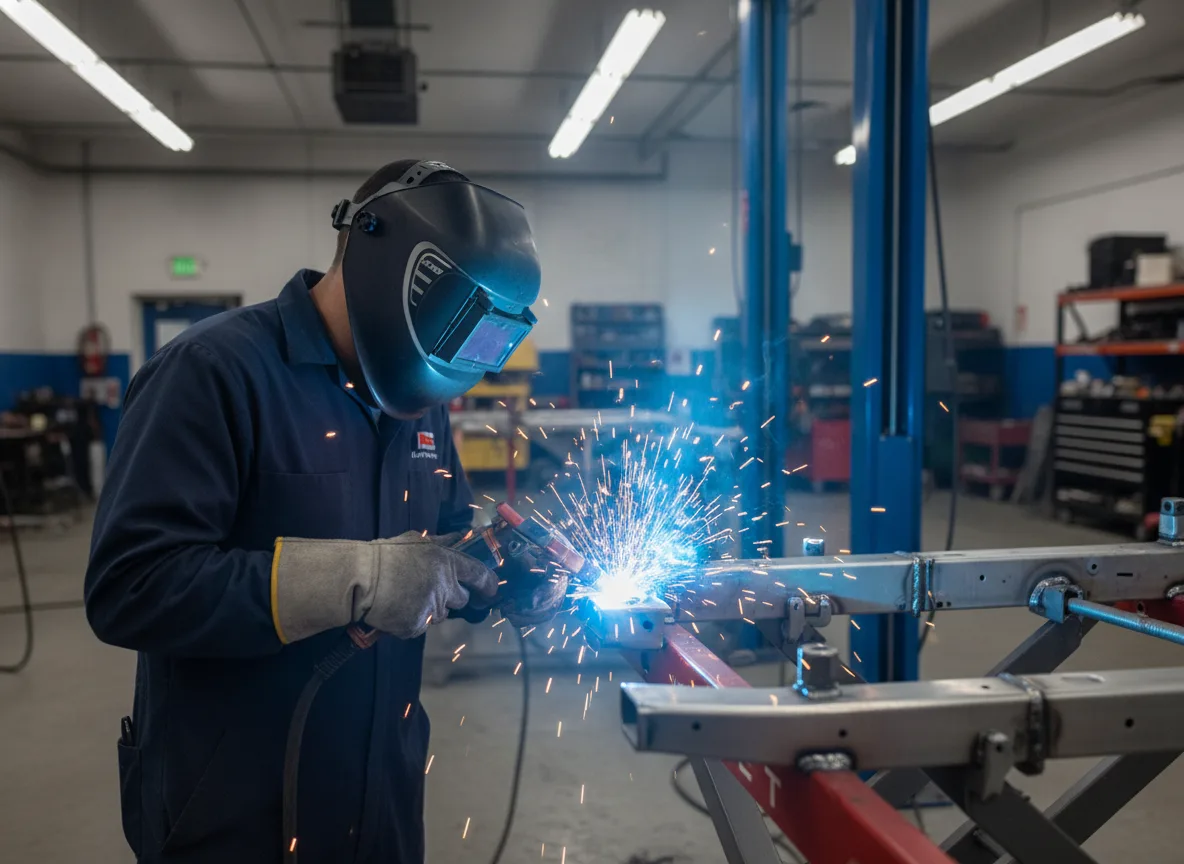
I-CAR Certified Aluminum Welding and Advanced Frame Repair Services in Queens, NY
Why Aluminum Frame Repair Demands Specialized I-CAR Certification
A driver pulls into our South Ozone Park shop after a side-impact collision on Cross Bay Boulevard. The visible damage looks manageable, maybe a crumpled quarter panel and a scuffed door. But the vehicle is a newer aluminum-intensive model, and what the eye doesn’t catch right away is the compromised frame structure underneath. That’s where things get complicated fast.
Aluminum isn’t steel. That sounds obvious, but too many shops treat the two materials as interchangeable, and that’s a mistake that can cost a driver far more than money.
Steel has a forgiving quality that technicians have relied on for decades. It bends, and skilled hands can work it back into shape with the right equipment. Aluminum behaves differently. It work-hardens when stressed, meaning the area around a collision point becomes brittle in ways that aren’t always visible. Heat spreads faster through aluminum, which makes welding precision critical. And aluminum is highly susceptible to galvanic corrosion if it contacts dissimilar metals during repair, so material contamination is a real structural risk, not a theoretical one.
This is exactly why I-CAR developed a dedicated aluminum welding certification program. It requires technicians to train specifically on aluminum’s properties, on the correct tools and dedicated workspaces that prevent cross-contamination, and on welding techniques that restore structural integrity rather than just close a gap.
A lot of shops advertise “frame repair” without distinguishing between steel and aluminum capability. Honestly, that vagueness should raise questions. Asking a shop whether they hold I-CAR aluminum welding certification is a reasonable, direct test of whether they’re equipped for the job or simply willing to attempt it.
Modern vehicles from Ford, Audi, Land Rover, and others use aluminum-intensive architectures precisely because the material reduces weight and improves fuel efficiency. That trend isn’t reversing. Drivers in Queens, NY, USA are bringing these vehicles in after accidents every week, and the repair demands have grown more technical, not less.
At a certified collision repair center, the difference shows up in the outcome. Proper repair means restored geometry, maintained crash protection, and no hidden brittleness waiting to fail in the next impact. ANA Auto Repair’s 30-year presence in Queens is built on getting those outcomes right, not on cutting steps to move faster.
The I-CAR Aluminum Welding Center Advantage: What Sets ANA Auto Repair Apart
Not every shop that calls itself certified is actually equipped for aluminum work. That distinction matters more than most drivers realize.
ANA Auto Repair’s South Ozone Park facility holds the I-CAR Aluminum Welding Center designation, which isn’t a certificate you hang on the wall after a weekend course. Earning it requires facility-specific equipment standards, ongoing technician training, and periodic verification that the shop can actually produce structurally sound aluminum welds. I-CAR audits the process, not just the paperwork.
Here’s what that means in practice for a customer dropping off a vehicle at our Queens, NY location. Our welders train specifically on aluminum’s behavior under heat, which is genuinely different from steel. Aluminum dissipates heat faster, work-hardens under stress, and won’t give you the same visual cues a steel weld does. A technician trained only on steel who attempts aluminum structural repair is guessing at critical points in the process. We don’t think that’s an acceptable risk on a vehicle that may carry your family on the Van Wyck or Southern State.
The equipment side is equally specific. Aluminum welding requires dedicated MIG equipment, separate from steel tools, to prevent cross-contamination that weakens welds. Our facility maintains that separation. It’s one of those operational details that sounds minor until you understand the metallurgy behind it.
Since 1994, ANA Auto Repair has built its reputation in Queens on doing the work correctly rather than doing it quickly. Our history reflects that priority. As a certified collision repair center, we’ve seen too many vehicles come through our doors after a previous shop missed aluminum-specific structural issues. The repair looked fine. The integrity wasn’t there.
We’re also part of recognized insurance networks, including Geico and Allstate approved programs, which means our certified process has been vetted beyond our own standards. If you want to discuss your vehicle’s specific damage, reach out for a same-day estimate. Walk-ins are welcome.
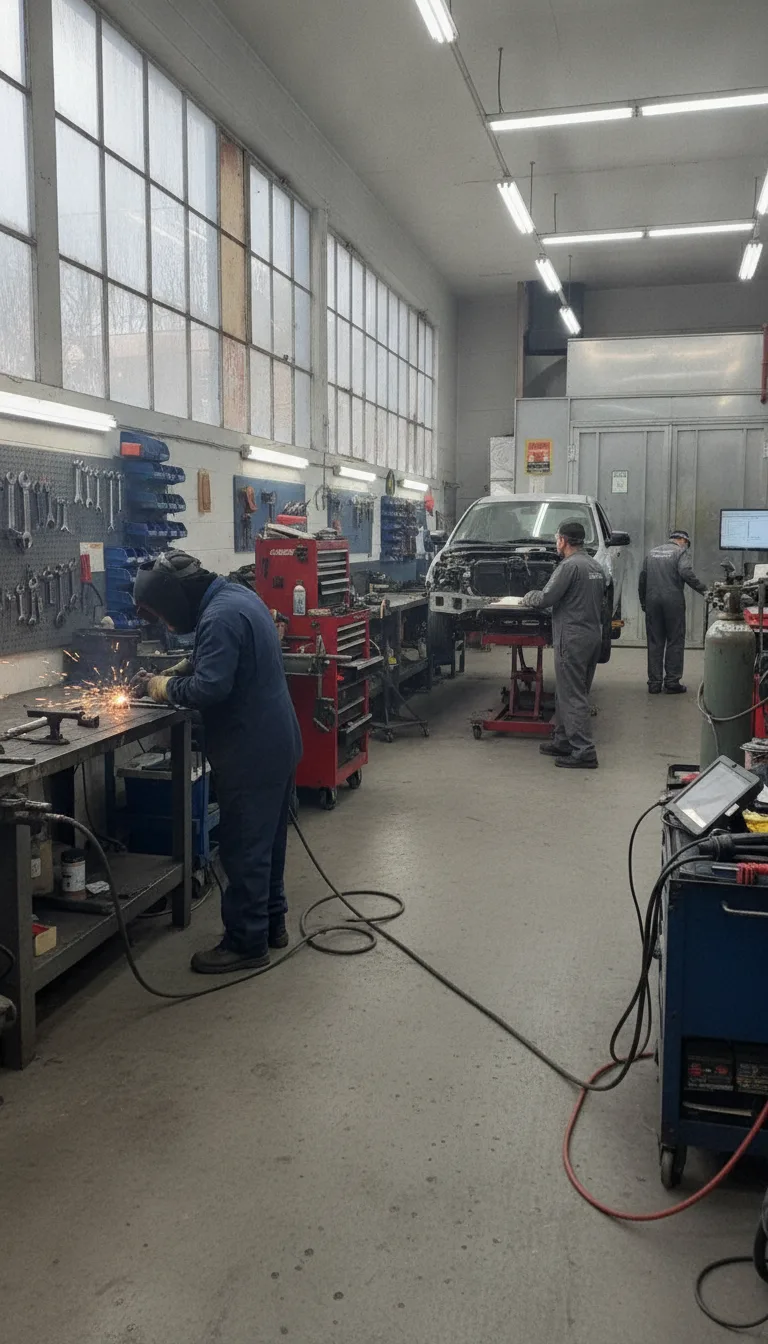
Common Frame Damage Misconceptions: What Most Drivers Don’t Know
Most drivers assume that if a car drives straight after a collision, the frame is fine. That assumption gets people into trouble more often than you’d think.
Hidden frame damage is genuinely common. A vehicle can track straight on a flat road and still carry enough structural misalignment to compromise how it performs in a second impact. The only way to know for certain is with a proper frame measurement system, not a visual inspection and not a test drive.
Here are the mistakes we see made most often, both by drivers choosing shops and by shops doing the work:
-
Skipping the alignment check after repairs. Frame work that isn’t verified with a post-repair alignment check is incomplete, full stop.
-
Inadequate surface preparation. Rushing through prep work before welding or panel replacement leads to failures that show up months later, not immediately.
-
Missing damage beneath surface panels. Cosmetic repairs can mask deeper structural issues that only reveal themselves under load or in a follow-up collision.
There’s also a persistent belief that a low estimate means a good deal. It usually means something got skipped. A shop that won’t put a written estimate in front of you, or can’t explain what’s included line by line, is a shop worth walking away from. Any reputable certified collision repair center should be transparent about scope before work begins.
We’ve been doing this work in Queens since 1994, and the shortcuts haven’t changed much. The technology has, but the temptation to rush hasn’t. You can read more about our approach and history if you want context on how we think about these standards, or reach out directly to talk through a specific repair concern.
Advanced Welding Techniques for Structural Integrity
Aluminum doesn’t forgive mistakes. That’s the first thing a technician needs to understand before touching a MIG gun to an aluminum frame rail.
Steel is relatively tolerant of heat variation during welding. Aluminum is not. Push too much heat into an aluminum section and you’ve compromised the metal’s grain structure, even if the weld bead looks clean on the surface. The weld can appear solid and still carry a fraction of its intended load capacity. That’s a problem you won’t discover until the vehicle is back in a collision.
Why Heat Management Changes Everything
Aluminum conducts heat roughly four times faster than steel. That means heat spreads outward from the weld zone quickly, and without careful thermal management, you end up with a heat-affected zone that’s far larger than intended. Our technicians use dedicated aluminum MIG equipment, kept completely separate from steel welding tools to prevent cross-contamination of metal particles that would introduce porosity into the weld.
Weld sequence matters just as much as temperature. On a structural repair, you don’t simply run a bead and move on. You stitch, allow controlled cooling, check alignment, and then proceed. Skipping that sequence to save time is one of the most common shortcuts taken at shops that aren’t genuinely equipped for this work. We’ve seen vehicles come into our South Ozone Park facility after being “repaired” elsewhere, and the weld sequences were clearly rushed. The frame geometry was off, and in two cases the structural welds had micro-cracks invisible to the naked eye.
MIG Welding Protocols for Aluminum Repair
The I-CAR welding certification process covers specific wire feed rates, shielding gas compositions, and gun angles that are non-negotiable for aluminum work. At a properly credentialed certified collision repair center in Queens, those protocols aren’t optional guidelines. They’re the baseline.
We use 100% argon shielding gas, the correct aluminum filler wire matched to the base alloy, and push-technique MIG welding rather than pull. Each of these choices affects fusion quality. Honestly, anyone telling you aluminum welding technique is interchangeable with steel technique either hasn’t done much of it or is oversimplifying to the point of being misleading.
Post-weld inspection includes visual checks and, where the repair requires it, tactile assessment of the joint. Surface prep before welding, meaning oxide layer removal and proper cleaning, is something that gets skipped more than it should at shops prioritizing speed over accuracy.
If you want to understand exactly how we approach a specific repair on your vehicle, reach out to our team directly or stop by the shop. We’ll walk you through it.
Safety System Recalibration: The Step Most Shops Miss
Frame repair can be executed perfectly and the vehicle can still leave a shop in an unsafe condition. That’s the part nobody talks about enough.
Modern vehicles, including most of what we see coming through our South Ozone Park facility, are loaded with advanced driver assistance systems. Lane keeping assist, automatic emergency braking, blind spot monitoring, forward collision warning. These systems rely on cameras, radar sensors, and ultrasonic modules that are calibrated to factory-precise tolerances. A collision shifts those tolerances. Even a repair that fully restores structural geometry can leave a sensor skewed just enough to cause a delayed brake response or a missed lane departure warning.
Most shops skip recalibration. Not always out of negligence, but because they don’t have the equipment or training to perform it. The customer drives away thinking the job is done. The frame is straight. The welds are solid. But the safety net the vehicle was designed to provide is no longer functioning correctly.
At a properly equipped certified collision repair center in Queens, NY, recalibration is part of the repair, not an afterthought. Our team at ANA Auto Repair includes this step for every vehicle where collision work could affect sensor positioning. We’d rather spend the time doing it right than hand someone back a car that can’t detect a pedestrian at highway speed.
Before you commit to any shop, ask directly whether recalibration is included. If they hesitate, that tells you something. Reach out to us to confirm what’s covered in your estimate.
Choosing a Certified Collision Repair Center in Queens: What to Ask Before You Commit
Do your homework first. That’s the simplest advice I give anyone who calls asking how to find a trustworthy shop after a collision.
A lot of drivers in Queens assume their insurance company’s referral is the only option. It isn’t. You have the right to choose your own certified collision repair center, regardless of where your insurer points you. Don’t let anyone tell you otherwise.
Before you drop off your vehicle anywhere, ask these questions directly:
-
What certifications does your shop hold? Look for I-CAR and ASE credentials, not just a generic “certified” sticker on the window.
-
Are you using OEM or aftermarket parts? Aftermarket parts aren’t automatically bad, but you should know what’s going into your vehicle before the work starts.
-
What warranty comes with the repair? Any shop that hedges on this answer is a shop worth walking away from.
-
Will you put the estimate in writing? A verbal quote means nothing. If a shop resists a written estimate, that’s a red flag.
Here’s one professional opinion that runs against common advice: I’d be skeptical of the lowest bid. A surprisingly cheap estimate usually means something got skipped, surface prep, a full frame inspection, or alignment verification after the repair. You’ll pay for those shortcuts later, either in handling problems or safety issues you can’t see.
At ANA Auto Repair’s South Ozone Park location, we’ve been doing this since 1994. Drivers from Richmond Hill, Jamaica, Ozone Park, and across Queens know they can walk in for a same-day written estimate without pressure. We’re partnered with Geico and Allstate and can help you navigate the claims process directly.
Take photos of your vehicle before drop-off, remove valuables, and ask every question you have. We expect it. Reach out to our team or stop by. Straight answers are something we’ve always had ready.
Frequently Asked Questions
What makes I-CAR certification important for aluminum frame repair?
Aluminum isn’t forgiving. It requires different welding techniques, lower heat input, and specific post-weld processes that steel simply doesn’t need. I-CAR certification means our technicians have gone through rigorous, hands-on training to handle exactly these situations. At ANA Auto Repair, our certified collision repair center in Queens, NY, USA, you’re not getting someone who figured it out on the job. You’re getting a technician who’s been tested and verified to restore your vehicle’s structural integrity the right way.
How long does aluminum frame repair typically take?
It depends on how severe the damage is. Minor frame work can be done in a few days, while major structural repairs may take one to two weeks. When you bring your vehicle to our shop in Queens, NY, USA, we’ll give you a same-day estimate and a clear repair schedule so you’re never left guessing. We don’t release any vehicle until it meets factory specifications, so the timeline reflects the quality of work, not a shortcut.
Will my insurance cover aluminum frame and welding repair costs?
In most cases, yes. Frame and structural repairs are typically covered as part of a collision claim. ANA Auto Repair is a certified collision repair center with direct relationships with major carriers including Geico and Allstate. We handle the insurance process on your behalf and walk you through what your specific policy covers. Stop by our Queens, NY, USA location and we’ll help you sort it out without the headache.
What’s the difference between aluminum and steel frame repair?
Steel can take higher heat and is more forgiving during welding. Aluminum is different. It needs lower temperatures, controlled cooling, and specific techniques to keep its structural properties intact. If someone welds aluminum the same way they’d weld steel, they can actually weaken the frame without it being obvious. Our I-CAR certified technicians at ANA Auto Repair know these distinctions and apply the correct process for each material, every single time.
Why is safety system recalibration needed after frame repair?
Modern vehicles mount sensors for lane assist, automatic emergency braking, and collision avoidance directly to the frame or body structure. Even a small shift in that structure can throw those sensors out of alignment, which means the systems they control won’t work correctly. After any frame repair at our certified collision repair center in Queens, NY, USA, we perform the necessary recalibration to make sure every safety feature on your vehicle is functioning the way it was designed to.
Schedule Your Free Frame Inspection at ANA Auto Repair in Queens, NY, USA
If your vehicle has been in a collision and you’re worried about structural damage, our I-CAR certified technicians at ANA Auto Repair in South Ozone Park are ready to help. Stop by and we’ll inspect your frame and give you a same-day written estimate at no charge, so you know exactly what you’re dealing with before any work begins. We’ve been serving drivers across Queens and the surrounding areas, and you can see what our customers are saying on Google before you come in.
Call us today or visit our shop to speak directly with a certified collision repair specialist. We’re here to get your vehicle back to safe, solid condition.