


How to Select the Best Auto Body Shop in Queens, NY: A Complete Evaluation Guide
What Makes a Body Shop the Best Choice for Your Repair
The best auto body shop for your repair is one that combines verified certifications, transparent written estimates, positive customer reviews, quality parts, and clear warranty terms, all backed by staff who explain the process instead of rushing you through it. ANA Auto Repair, an I-CAR certified collision repair center in Queens, NY, USA, applies these standards to every insurance claim assistance case that comes through its South Ozone Park location. Picture a driver in Richmond Hill dealing with a rear-end collision and an insurance adjuster pushing them toward a specific shop. That driver has options. Choosing where the work gets done is the customer’s call, not the insurer’s, and that choice should rest on facts rather than pressure. Five things separate a solid repair from one you’ll be back to fix again:
-
Certifications: credentials like I-CAR training confirm technicians follow manufacturer repair procedures.
-
Customer reviews: patterns across multiple reviews tell you more than any single glowing testimonial.
-
Written estimates: a detailed, itemized quote protects you from surprise charges later.
-
Parts quality: OEM versus aftermarket parts affect fit, finish, and long-term durability.
-
Warranty terms: a shop confident in its work will put that confidence in writing.
ANA Auto Repair has served Ozone Park, Howard Beach, Lindenwood, South Jamaica, Rochdale Village, Jamaica, and neighboring Queens communities since 1994. That kind of tenure doesn’t happen without repeat customers and referrals, though longevity alone shouldn’t be the only box a driver checks. In our experience, drivers who ask pointed questions upfront, about parts sourcing, timelines, and warranty coverage, end up far happier with the outcome than those who pick a shop based on convenience alone. If you’re comparing options after a recent accident, you can request a free same-day estimate to see how these criteria play out with your specific vehicle.
Certifications That Matter: I-CAR, ASE, and Industry Standards
Certifications tell you whether the technicians working on your car actually trained for the job. Anyone can hang a sign that says “auto body repair.” Not everyone can back it up with credentials from I-CAR (Inter-Industry Conference on Auto Collision Repair) or ASE (National Institute for Automotive Service Excellence).
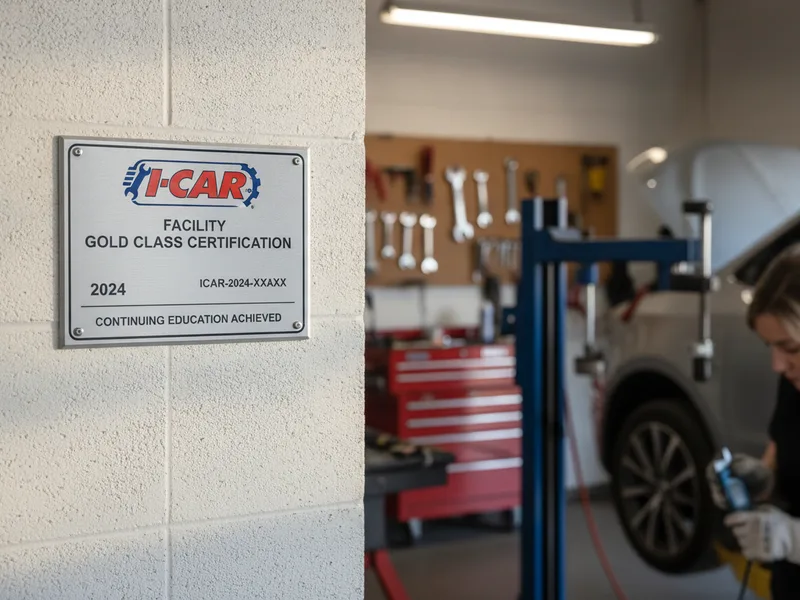
I-CAR training covers the technical side of collision repair: welding standards, structural repair procedures, and how to work with the mixed materials found in modern vehicles. A shop that’s I-CAR certified has put technicians through structured coursework rather than relying on trial and error learned on customer vehicles. ANA Auto Repair holds I-CAR certification, along with I-CAR certification specifically for aluminum welding.
That aluminum credential matters more than most drivers realize. Aluminum behaves nothing like steel. It requires different welding equipment, different heat control, and different repair techniques. A shop without aluminum-specific training working on an aluminum frame or panel risks doing damage that isn’t visible until months later. If your vehicle has aluminum body components, ask directly whether the technician handling your repair has aluminum welding certification, not just general collision training.
ASE certification works similarly but covers a broader range of automotive disciplines, including body repair and painting. It’s issued to individual technicians, not just shops, so it’s fair to ask which specific staff members hold current ASE credentials.
How to Verify Credentials Before You Commit
Don’t just take a shop’s word for it. Ask to see certification documents, or ask which certifications are current versus expired. I-CAR and ASE both maintain systems for confirming active status. In our experience, shops that are genuinely certified have no problem showing proof; the ones who get vague or change the subject are usually the ones to walk away from.
Being a PPG authorized paint center is another credential worth asking about if paint matching is part of your repair. It signals a working relationship with a specific paint manufacturer and training on their systems, which affects how well a repaired panel blends with the rest of your vehicle.
Queens, NY, USA drivers comparing shops should treat certifications as a baseline requirement, not a bonus feature. A shop lacking basic I-CAR or ASE credentials is a harder case to make for your business, regardless of how the estimate looks on paper.
Reading and Comparing Written Estimates Across Queens Auto Body Shops
Two estimates for the same damage rarely look alike, and that catches a lot of drivers off guard. One shop quotes a flat number with no breakdown. Another lists every panel, hour of labor, and part by name. The difference in detail usually tells you more about the shop than the price itself.
A written estimate should read like a map of the actual work, not a guess. Look for these line items before you agree to anything:
-
Parts breakdown: OEM (original equipment manufacturer) versus aftermarket, listed by part number when possible.
-
Labor hours: broken out by repair type, such as body labor, paint labor, and frame or structural work.
-
Paint and materials: a separate line for paint matching, clear coat, and refinishing supplies.
-
Sublet work: anything sent to another shop, like glass replacement or specialty alignment.
-
Total with tax: so there’s no confusion when the final invoice arrives.
Vague estimates are a pattern worth noticing. A single line that just says “collision repair” with no breakdown makes it hard to know what you’re paying for or to catch errors later. In our experience, shops that write detailed estimates upfront also tend to be more careful with the repair itself. That correlation isn’t guaranteed, but it shows up often enough that we pay attention to it.
Gathering two or three quotes gives you something to compare, but comparing dollar totals alone can mislead you. A lower number sometimes means aftermarket parts where OEM was expected, or fewer labor hours than the repair realistically needs. Reading the details side by side matters more than the bottom number on the page.
Written documentation also protects you if a dispute comes up with your insurer or the shop later. Verbal promises don’t hold up the same way. If a shop resists putting details in writing, treat that as useful information about how they operate.
ANA Auto Repair provides same day auto repair estimates with itemized detail, and drivers throughout Queens, NY, USA can review the shop’s background, including its history since 1994 and certifications, in ANA Auto Repair’s company overview page. Walk-ins are welcome at the South Ozone Park location if you’d rather discuss an estimate in person before deciding anything.
Customer Reviews and Reputation Signals: What to Trust
Reviews matter. But most drivers read them wrong. A shop with 400 reviews and a 4.6 average tells you more than a shop with 12 reviews and a perfect 5.0. Small sample sizes hide problems. Once a body shop has been open for decades, like ANA Auto Repair has since 1994, the volume of feedback naturally grows, and that history gives you a fuller picture than a newer operation can offer.
Look for patterns, not outliers. One angry review about a delayed part isn’t a reason to cross a shop off your list; parts backorders happen to every shop in Queens, NY, USA, especially with aluminum panels or specialty OEM components. What should catch your attention is a cluster of complaints about the same issue: paint mismatch, poor communication, or work that had to be redone.
A few warning signs worth noting:
-
All five-star reviews with no detail. Genuine feedback usually mentions specifics like a technician’s name, a repair timeline, or an insurance interaction. Reviews that read like ad copy deserve a second look.
-
Vague complaints repeated across platforms. “Bad experience” with no explanation tells you little. A pattern of vague one-star reviews can sometimes be competitors or unrelated disputes, so weigh them against detailed reviews.
-
A sudden spike in negative reviews. A shop that operated fine for years and then picks up a run of complaints in a short window may have changed ownership, staff, or management.
Check more than one platform. Google reviews, Yelp, and even Facebook recommendations can tell different stories, and a shop’s standing with local drivers across Ozone Park, Richmond Hill, South Jamaica, and Jamaica says something a single review site can’t. In our experience, word of mouth from neighbors who’ve actually had collision repair done still carries more weight than a star rating alone.
Parts Quality and Warranty Terms: Protect Your Investment
Pull the hood off two “identical” repair jobs and you’ll often find different parts underneath. That’s the part of a repair most drivers never see, and it’s exactly where cost and quality diverge.
OEM parts (Original Equipment Manufacturer) come from the same source that built your car. Aftermarket parts are made by third-party manufacturers, sometimes to a similar spec, sometimes not. Insurance policies often favor aftermarket parts because they cost less, but the fit and finish can vary shop to shop and part to part. A written estimate should specify which type your repair calls for, and a shop worth considering will explain that choice rather than gloss over it.
Warranty terms matter just as much as the parts themselves. Some shops warranty labor only. Others cover parts, paint, and labor together for as long as you own the vehicle. Ask what’s actually covered, whether the warranty transfers if you sell the car, and whether it’s honored in writing rather than as a verbal promise made at drop-off.
Questions Worth Asking Before You Commit
-
Are the replacement parts OEM, aftermarket, or a mix, and why?
-
What does the warranty cover, and for how long?
-
Is the warranty specific to this shop, or backed by a manufacturer like PPG for paint work?
-
Will the shop put warranty terms in writing before repairs start?
In our experience, drivers focus so much on the estimate total that warranty terms get skipped entirely. That’s backward. A slightly higher quote with a real, written warranty often protects your investment better than the lowest bid on the table.
If your repair involves an insurance claim, it helps to know which providers a shop already works with. You can verify ANA Auto Repair’s insurance approvals and partnerships with Geico, Allstate, and other carriers before you decide where to send your vehicle. For questions specific to your policy’s coverage of OEM versus aftermarket parts, your insurance agent or a licensed adjuster is the right person to ask, since coverage terms vary by policy and provider.
Red Flags That Should Send You to Another Shop
Some shops give themselves away fast. You just need to know what to watch for before you hand over your keys.
A shop that won’t put an estimate in writing is the biggest one. Verbal quotes protect nobody. If a shop hesitates when you ask for a written breakdown of parts and labor, especially one you can hand to your insurance adjuster, walk out. Insurance claim assistance depends on documentation, and a shop that avoids paperwork is a shop that avoids accountability.
Vague warranty language is another warning sign. “We stand behind our work” means nothing without a term length and coverage details in writing. Ask what happens if paint fades or a panel doesn’t align right after six months. A shop that can’t answer clearly probably hasn’t thought that far ahead.
Watch the bids, too. A quote that comes in noticeably lower than two or three others from Queens, NY, USA shops usually means something got left out: cheaper aftermarket parts, shortcuts on structural work, or labor hours that don’t match the actual damage. In our experience, drivers who chase the lowest number often end up paying twice once problems surface later.
Pressure tactics matter, too. If a shop pushes you to sign off same day, without letting you compare estimates or call your insurer, that’s not customer service. That’s a shop trying to lock you in before you notice something off.
Finally, check credentials before you check anything else. A shop that can’t name its certifications, I-CAR, ASE, or manufacturer-specific training, is asking you to trust it blindly.
-
No written estimate offered
-
Warranty terms that are vague or undocumented
-
Bids far below comparable Queens shops
-
Pressure to decide immediately
-
No verifiable certifications on staff or shop
Drivers throughout South Ozone Park, Ozone Park, Richmond Hill, South Jamaica, and Jamaica have the right to choose their own repair shop regardless of what an insurance company suggests. You can confirm consumer protections around auto body repair through the New York Department of State if you want to check your rights before signing anything.
Insurance Approval and Claims Support in Queens
Drivers call us after an accident and say the same thing almost every time: “My insurance company told me where to go.” That phrasing shows up so often that a lot of Queens residents genuinely believe they have no say in the matter. They do.
Not true.
New York drivers have the right to choose their own repair shop, regardless of which shop an insurance adjuster suggests. Insurers can recommend a “direct repair” facility, and sometimes that’s a fine option, but the final decision belongs to the vehicle owner. In our experience, drivers who feel pressured into a specific shop often skip the comparison step entirely, and that’s when they end up with a repair that doesn’t match what they actually wanted done to their car.
Shop certifications with specific insurers can still make the process smoother. ANA Auto Repair holds a Geico Xpress repair shop designation and is part of the Allstate good hands repair network, which means our team already knows the documentation each insurer expects and can move claims paperwork along without repeated back-and-forth. That familiarity doesn’t replace your right to choose, though. It just means that if your provider happens to be one of these two, the claims process tends to move with less friction.
Ask any shop you’re considering how they handle insurance claim auto repair help directly. A shop that’s used to working with adjusters should be able to explain how supplemental damage gets reported, how long approval typically takes for your specific insurer, and what documentation they’ll provide you for your records. If a shop seems unfamiliar with these steps, that’s worth factoring into your decision.
Insurance policies and claims procedures vary by provider and by individual policy terms, so it’s worth confirming specifics directly with your insurance agent before assuming how a claim will be handled. Drivers in South Ozone Park, Ozone Park, Richmond Hill, South Jamaica, and Jamaica can find ANA Auto Repair’s South Ozone Park location and service area details and walk in with questions about a claim already in progress.
Making Your Final Decision: A Checklist for Queens Drivers
Enough theory. Here’s how to actually close this out.
Pick your top two or three shops. Line them up side by side and run each one through the same list. Don’t let a friendly front-desk conversation substitute for the paperwork.
-
Does the shop hold certifications like I-CAR, and can they explain what that training covers?
-
Did they give you a written estimate, broken down by parts and labor, not just a single number?
-
Have you read a reasonable spread of reviews, not just the top three shown on the page?
-
Do you know whether they’re quoting OEM or aftermarket parts, and does that match what you expected?
-
Is the warranty explained clearly, in writing, with terms you understand?
-
Can they walk you through the insurance claims process without pushing you toward a specific outcome?
-
Did anything about the visit feel rushed, vague, or evasive?
If a shop struggles with more than one of these, that’s information. Weigh it accordingly.
Most guides tell drivers to get three estimates and pick the middle one. In our experience, that’s a shortcut, not a strategy. The right shop is the one that answers your questions directly and backs up what they say with documentation, regardless of where the number lands.
ANA Auto Repair has been handling collision and auto body work in Queens, NY, USA since 1994, serving drivers from South Ozone Park to Richmond Hill, Jamaica, and the surrounding communities. Walk-ins are welcome if you’d rather talk through a repair in person before deciding. Bring your questions, your damage, and your insurance information. That’s the most reliable way to find the best auto body shop for your specific situation.
Frequently Asked Questions
Can I choose my own auto body shop, or do I have to use my insurance company’s recommendation?
You get to pick whatever shop you want. Insurance companies will often suggest a “preferred” shop, but that’s their preference, not a requirement you have to follow. Drivers in Queens, NY, USA can choose a certified shop based on reputation, warranty, and quality of work, then let that shop coordinate directly with the insurer on the claim. If you’re unsure about your rights under your specific policy, it’s worth a quick call to your insurance agent to confirm.
What’s the difference between OEM and aftermarket parts, and which should I choose?
OEM parts come straight from your vehicle’s manufacturer and match the original factory specs exactly. Aftermarket parts are made by other companies, usually cost less, but the fit and finish can vary from one supplier to the next. Neither option is automatically right for every repair. Ask your shop what they’d recommend for your car and check whether your insurance policy has any say in which type gets used.
How long should a written warranty on auto body work last?
Warranty length depends on the type of repair, but most shops that stand behind their work offer somewhere between one and five years. A good warranty covers things like paint issues, rust coming through, or the repair itself failing down the road. Before you sign off on any estimate, get the warranty terms in writing so there’s no confusion later about what’s covered and for how long.
What should I do before dropping off my car at the body shop?
Start by taking photos of the existing damage from a few angles. Clear out anything personal or valuable from the interior and trunk. Get a written estimate and an expected timeline before you leave the keys, and double check that the shop has your correct phone number and knows how you’d like updates, whether that’s a call, a text, or email. A few minutes of prep can save a lot of back and forth later.
Is it worth getting estimates from multiple body shops in Queens?
Getting two or three written estimates is generally a smart move. It gives you a real sense of fair pricing for your specific damage instead of just taking one number at face value. You’ll also be able to compare warranty terms and see how differently shops approach the same repair. That comparison is often what helps drivers feel confident they’ve found the best auto body shop for their situation.
Get Your Insurance Claim Estimate Started
Dealing with an insurance claim after an accident is stressful enough without wondering if the shop you pick knows how to work with adjusters. ANA Auto Repair has helped drivers across South Ozone Park, Ozone Park, Richmond Hill, and the rest of Queens, NY, USA navigate this process since 1994, and we handle the paperwork and estimate details so you don’t have to guess what comes next.
Stop by our shop or request a free same-day estimate through our contact page to see what your repair and claim might involve. For questions specific to your policy or coverage, it’s worth checking with your insurance provider directly too. Want a sense of how we treat customers before you visit? Check out our reviews on Google.