


Frame Alignment and Unibody Repair Excellence at Our Certified Collision Repair Center in Ozone Park, Queens
Why Frame Alignment Matters After a Collision
A driver on Woodhaven Boulevard gets rear-ended at a red light. The bumper looks scuffed, the trunk still opens, and the car drives away under its own power. So the damage can’t be that bad, right? That assumption is one of the most expensive mistakes a vehicle owner can make. What looks minor on the surface can hide significant structural distortion underneath, and that’s where frame alignment becomes a life-safety issue, not just a cosmetic one.
Your vehicle’s frame or unibody structure is engineered to precise tolerances. Even a few millimeters of misalignment can throw off your steering geometry, wear your tires unevenly, and compromise how the vehicle performs in a future collision. The crumple zones designed to absorb impact energy don’t work correctly if the underlying structure is already bent. That’s not an opinion; it’s basic crash physics backed by Insurance Institute for Highway Safety research on structural integrity.
Most drivers focus on what they can see. Body shops that cut corners encourage this, because invisible frame damage is easier to skip and harder for a customer to dispute. We’d push back on the common advice to “get the cheapest quote and move on.” A low estimate often means someone decided your frame check wasn’t worth the time.
Here’s what misaligned frames actually cause in daily driving:
-
Persistent pulling to one side even after a wheel alignment
-
Uneven or accelerated tire wear that reappears after new tires are installed
-
Doors and trunk lids that don’t close flush the way they used to
-
Handling that feels vague or unpredictable at highway speeds
None of those symptoms are minor. And none of them get better on their own.
Drivers from Ozone Park, Queens and the surrounding neighborhoods deserve repair work done to the standard their vehicle was built to. At ANA Auto Repair, we’ve been doing this since 1994, and our I-CAR certifications and decades of hands-on experience exist specifically to handle the cases where the real damage isn’t obvious at first glance. Choosing a certified collision repair center for frame work isn’t overcautious. It’s the only reasonable choice when your safety on the road depends on the result. Reach out to us for a same-day estimate if you’re questioning what a recent collision might have done beneath the surface.
Understanding Your Vehicle’s Frame and Unibody Structure
Two cars. Two completely different structural philosophies. Understanding which one you’re driving changes everything about how collision damage should be assessed and repaired.
Body-on-Frame vs. Unibody Construction
Older trucks, full-size SUVs, and some commercial vehicles use a body-on-frame design. That means a separate steel ladder frame carries the vehicle’s load, with the body bolted on top. If that frame takes a hit, it can often be straightened with targeted heat and hydraulic force, and the repair zone is relatively contained.
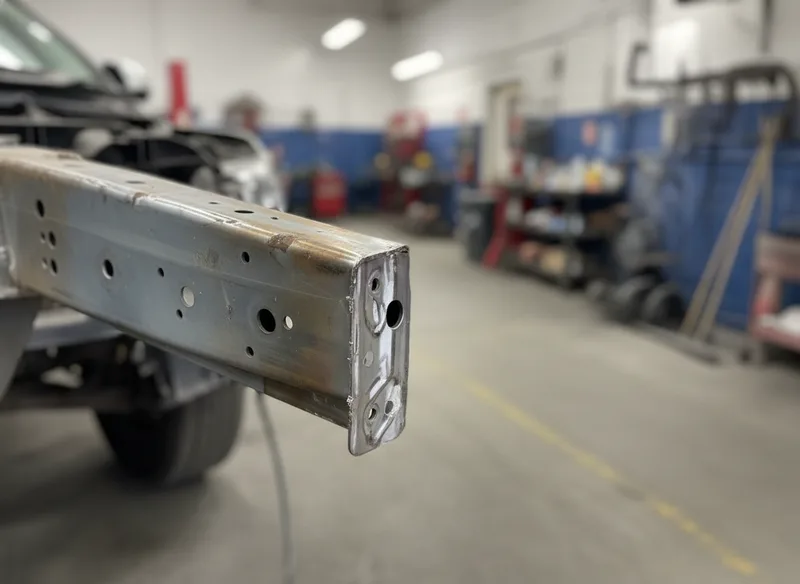
Most modern passenger cars, crossovers, and sedans use unibody construction. There is no separate frame. The floor pan, rocker panels, firewall, A-pillars, and roof all work together as a single integrated shell. The structural integrity of the vehicle depends on every one of those components doing its job.
That distinction matters enormously after a collision.
How Unibody Vehicles Absorb Impact
Modern unibody vehicles are engineered with crumple zones, sections deliberately designed to deform and absorb crash energy before it reaches the passenger cabin. This is smart engineering that saves lives. The tradeoff is that even a moderate collision can send stress through structural sections that look completely undamaged from the outside.
A rear-end impact on Cross Bay Boulevard doesn’t just bend the bumper. That energy travels through the rear rails, into the floor structure, and sometimes forward toward the firewall. A visual inspection alone will never catch all of it. This is exactly why proper diagnostic equipment is non-negotiable in unibody repair, not optional.
Why Repair Approaches Differ
Some shops treat unibody repair the same way they’d handle a traditional frame pull. That’s a mistake. Unibody sections have specific yield points and material properties. Applying too much corrective force in the wrong location can introduce new stress rather than remove existing damage.
Aluminum-intensive unibody structures add another layer of complexity. Aluminum doesn’t behave like steel under stress or heat, and repairs require specialized certification, including I-CAR aluminum welding credentials, to handle correctly. Not every shop carries that qualification.
There’s a common belief that frame damage always means a totaled car. That’s often wrong. With the right equipment, trained technicians, and proper insurance coordination, structural repairs can restore a vehicle to factory specifications. Drivers in Ozone Park, Queens deserve a certified collision repair center that understands the difference and has the credentials to back it up.
Understanding your vehicle’s structure is the first step. Knowing who to trust with the repair is the second. Reach out to our team to schedule your same-day estimate.
The Frame Alignment and Diagnostic Process
Every technician eventually learns this the hard way: a vehicle can measure perfectly straight at one point on the frame and still be significantly off everywhere else. That’s why modern frame work isn’t a single check. It’s a full-vehicle diagnostic sequence, and skipping any step in that sequence compromises everything that follows.
Step One: The Damage Assessment
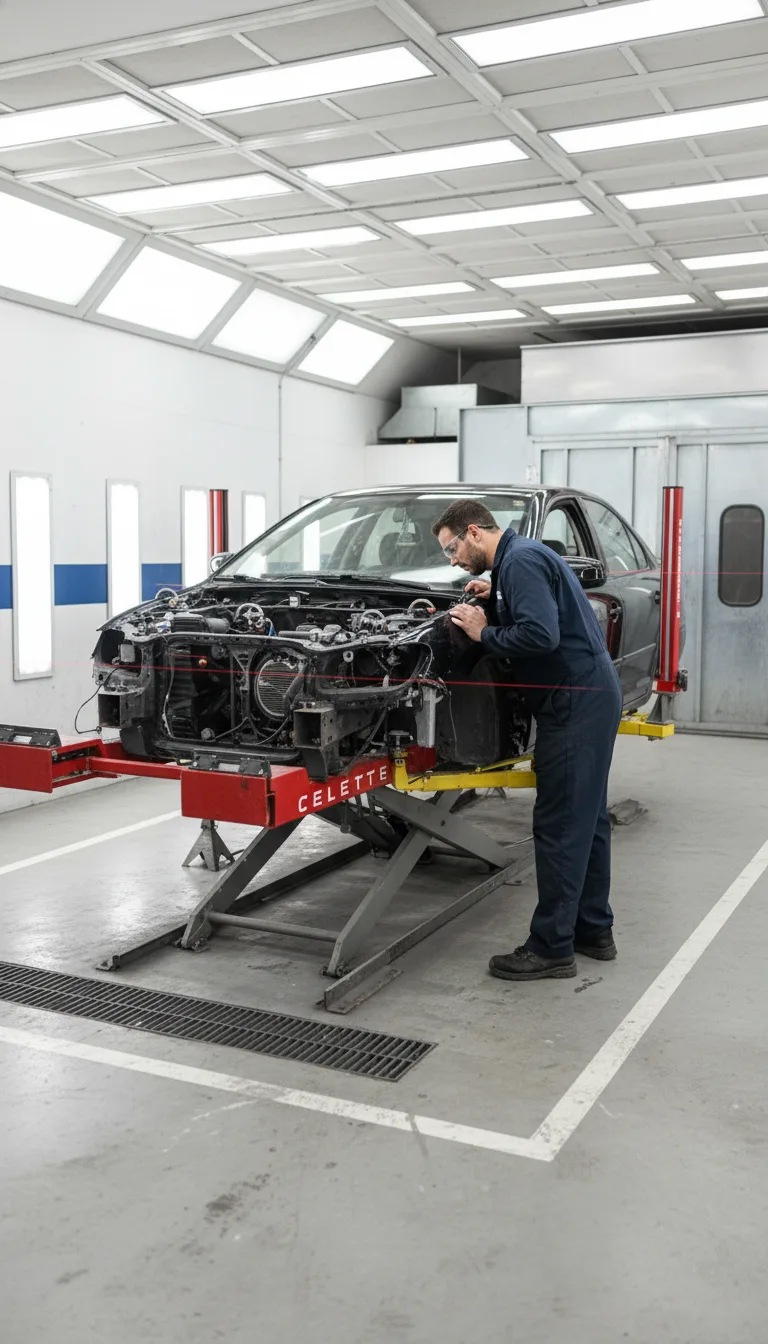
Before any pulling equipment gets attached, a thorough visual and tactile inspection comes first. Technicians look for rippling in the metal, misaligned panel gaps, and stress creases that indicate where force traveled through the structure. On a unibody, collision energy moves through crush zones in predictable patterns, so a trained eye can often trace secondary damage points just by reading where those creases end up.
Photos and measurements taken at this stage become the baseline. Without them, you’re guessing.
Step Two: Computerized Laser Measuring
This is where precision actually begins. Modern frame alignment systems use laser and computerized measurement technology to map the vehicle’s geometry against factory specifications, comparing hundreds of reference points simultaneously. The software flags deviations down to fractions of a millimeter.
A lot of shops treat a single-pass measurement as sufficient. We don’t agree with that approach. At a proper certified collision repair center, measurements happen before pulling, during pulling, and again after pulling is complete. The frame moves incrementally, and real-time data tells the technician exactly how much correction has been achieved at every stage.
At ANA Auto Repair, our I-CAR certified team relies on this kind of precision measurement to verify that every repair meets factory geometry standards, not just a close approximation.
Step Three: Controlled Pulling and Correction
Pulling is controlled force. Hydraulic anchoring systems secure the vehicle while calculated pressure is applied to move deformed metal back toward specification. The direction, angle, and magnitude of each pull matter. A technician who rushes this stage risks overcompensating or introducing new stress points into areas that weren’t damaged originally.
Some damage requires heat to restore metal to its proper position without cracking. Knowing when to apply heat and when to work cold is a skill that only comes with real experience. Our team has been doing this work across a full range of collision repairs since 1994.
Step Four: Verification and Documentation
The job isn’t finished when the pulling stops. A final round of computerized measurements confirms the vehicle has returned to factory specifications. That documentation matters because it creates a record you can reference if questions arise later, and it’s often required by insurance carriers like Geico and Allstate during the claims process.
Drivers coming to us from Ozone Park, Queens get this full process on every frame repair, no shortcuts. Request your same-day estimate and we’ll walk you through exactly what your vehicle needs.
Common Mistakes in Frame and Unibody Repair
Most frame jobs don’t fail because of what was done wrong. They fail because of what was skipped.
After nearly 30 years working collision repairs in Queens, the same patterns show up over and over at shops that cut corners. If you’re vetting a certified collision repair center and want to know what separates quality work from a liability waiting to happen, start here.
Inadequate Surface Preparation
Rushing through surface prep is the most common shortcut in the industry. Corrosion, contamination, or improper cleaning before welding or sectioning will compromise a structural repair regardless of how precise the measurements looked on the alignment rack. A clean, properly prepped surface isn’t optional. It’s the foundation every other repair step depends on.
Overlooked Hidden Damage
This one is genuinely dangerous. Visible damage after a collision is rarely the complete picture. Impact forces travel through a unibody structure in ways that aren’t obvious from a visual inspection. Crumple zones are designed to absorb energy, which means that energy has to go somewhere. Shops that write estimates based on what they can see, without a proper multi-point measurement diagnostic, are guessing. That’s not an acceptable standard for a structural repair.
Drivers from Ozone Park, Queens who bring their vehicles to ANA Auto Repair get a full diagnostic process before any repair plan is finalized, not an estimate built on assumptions.
Skipping the Post-Repair Alignment Verification
Here’s a professional opinion that some shops won’t love: a final alignment check should be non-negotiable, not an upsell. Correcting frame geometry and then sending the car out without verifying the result defeats the purpose of the repair. A vehicle that measures straight on paper but pulls left tells you the job isn’t finished.
Watch for warning signs too. Any shop that won’t provide a written estimate, offers no repair warranty, or comes in with a bid that seems surprisingly low compared to others deserves a second look. Learn more about our certifications and approach before you make your decision. You have the right to choose where your vehicle gets repaired, and that choice matters.
Serving Ozone Park, Queens with Certified Excellence
Certifications on a wall mean nothing if the work doesn’t hold up on the road. That’s the standard we’ve held ourselves to at ANA Auto Repair since 1994.
We’re based in Queens and proud to serve drivers throughout Ozone Park, Richmond Hill, South Jamaica, and the surrounding neighborhoods. The roads around Cross Bay Boulevard and Woodhaven Boulevard see real traffic, real accidents, and real vehicles that need more than a surface-level fix. Drivers here deserve a certified collision repair center that treats structural damage with the seriousness it requires.
Our I-CAR certified team is trained specifically in the kind of precision frame and unibody work that modern vehicles demand. That’s not a credential we earned once and forgot about. I-CAR requires ongoing training, which means our technicians stay current as vehicle construction evolves. We’re also a PPG authorized paint center, and our aluminum welding certification sets us apart for vehicles where unibody repairs involve mixed-material construction.
Insurance shouldn’t be a barrier to proper repairs. As a Geico Xpress shop and Allstate Good Hands network member, we handle the claims process directly, so you’re not stuck in the middle. A lot of shops push customers toward whoever the insurer recommends. You have the right to choose your own shop, and that choice matters when frame damage is involved.
We offer same-day estimates and put everything in writing. No vague ballparks. You’ll know what the repair involves before anything gets started.
Ozone Park customers get the same quality, the same certified process, and the same accountability as anyone who walks through our door. Request your estimate today and see the full range of collision and body repair services we provide.
Safety Systems Recalibration: The Final Alignment Step
Most shops stop at straight. That’s not enough anymore.
Modern vehicles are loaded with advanced driver assistance systems that depend on precise sensor positioning to function correctly. Lane departure warning, automatic emergency braking, blind-spot monitoring, adaptive cruise control. Every one of these systems can be thrown off by collision work, even a repair that looks clean on the frame measurement printout.
Here’s where a lot of shops quietly drop the ball. The frame gets straightened, the panels fit, the car drives out looking fine. But if nobody recalibrates the forward-facing radar or the camera mounted behind the windshield, that automatic braking system may trigger late, or not at all. That’s not a minor inconvenience. That’s a safety failure waiting to happen on Cross Bay Boulevard or anywhere else.
At ANA Auto Repair, recalibration is part of the repair, not an afterthought. Our I-CAR certified technicians are trained on these systems specifically because the industry has moved well past bolt-on panels and paint. If you want to know the full range of what we handle, the services page covers it.
Honestly, any shop that calls itself a certified collision repair center and doesn’t address ADAS recalibration after structural work isn’t truly finished with the job.
Drivers in Ozone Park, Queens deserve repairs that are complete, not just cosmetically acceptable. Reach out to schedule your estimate and ask us directly about our recalibration process. We’ll give you a straight answer.
Frequently Asked Questions
How do I know if my vehicle needs frame alignment after a collision?
There are a few telltale signs: uneven tire wear, your car pulling to one side while driving, visible gaps between body panels that don’t sit level, or doors that feel stiff and don’t close the way they used to. Even if the damage looks minor on the surface, there could be structural issues underneath. At ANA Auto Repair, our certified collision repair center in Ozone Park, Queens, NY, USA, we use diagnostic laser alignment equipment to give you a clear, accurate picture of what’s actually going on with your vehicle’s frame.
What’s the difference between frame repair and unibody repair?
Older vehicles are built with a separate steel frame that the body sits on top of. Unibody vehicles, which is most modern cars and trucks, combine the frame and body into a single structure. These two designs require very different repair approaches and tools. A certified collision repair center knows how to identify your vehicle’s construction and apply the right method. Bringing the wrong technique to either type of vehicle can compromise structural integrity, so this isn’t something to take shortcuts on.
How long does frame alignment repair typically take?
It really depends on the severity of the damage. A straightforward alignment can be done in one to two days. More complex structural damage, where multiple areas of the frame are affected, can take a week or longer. We don’t want you guessing about timelines. When you bring your vehicle to ANA Auto Repair in Ozone Park, Queens, NY, USA, we’ll give you a same-day estimate that includes a detailed breakdown of the work involved and a realistic completion date so you can plan accordingly.
Will my insurance cover frame and unibody repair?
In most cases, yes. Comprehensive and collision policies typically cover structural damage from an accident. As a certified collision repair center, we’ve built working relationships with major insurers including Geico and Allstate, which helps speed up the approval process. We handle the claims communication on your behalf and can often set up direct billing so you’re not stuck chasing paperwork. Stop by our shop in Ozone Park, Queens, NY, and we’ll walk you through the process from start to finish.
Why is recalibration of safety systems important after frame repair?
Your vehicle’s safety features, things like lane assist, automatic emergency braking, and blind spot monitoring, depend on sensors and cameras that are calibrated to very precise positions. Frame or unibody work can shift those components even slightly, which is enough to make those systems unreliable or completely ineffective. After any structural repair, proper recalibration isn’t optional. At our certified collision repair center, we make sure every system is tested and recalibrated before your vehicle leaves our shop, so it’s actually protecting you the way it’s supposed to.
Get Your Frame Alignment Done Right at ANA Auto Repair in Ozone Park, Queens, NY
If your vehicle took a hit and you’re not sure how bad the damage runs, bring it in and we’ll give you a straight answer. We offer same-day frame alignment and unibody assessments, so you’re not left waiting around wondering whether your car is safe to drive. Our team serves drivers all across Queens, and we’re proud to be the shop our neighbors in Ozone Park, Howard Beach, and Jamaica trust when it really counts.
Stop by and see us in person, or check out our reviews on Google to hear directly from customers we’ve already helped. Call us today and let’s get your vehicle’s structural integrity restored the right way.