


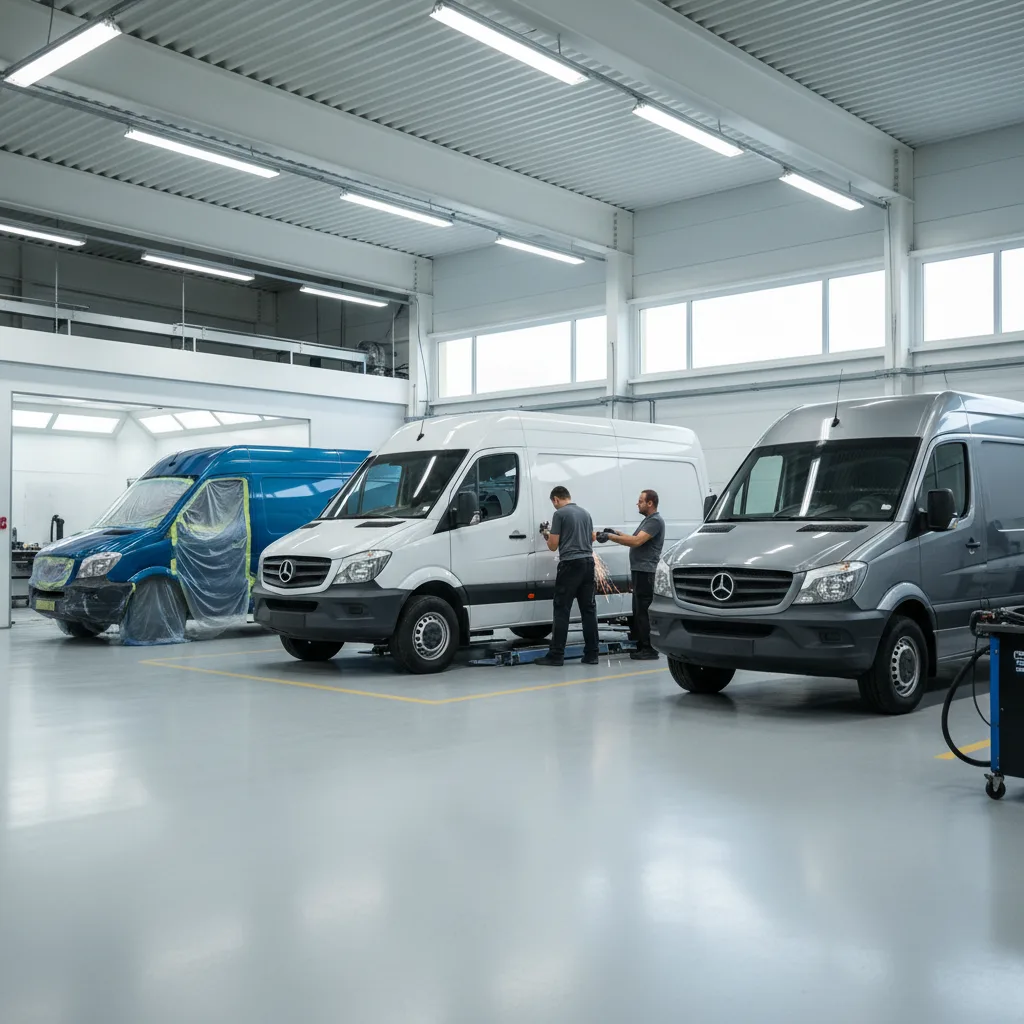
Fleet Collision Repair Service for Jamaica, Queens Businesses
Why Fleet Vehicles Need Specialized Collision Repair
Picture this: a Jamaica, Queens delivery company runs six cargo vans out of a depot off Sutphin Boulevard. One Monday morning, two of them come back with front-end damage from a tight squeeze near the JFK cargo terminals. The owner calls around to a few local shops and gets the same answer: drop it off, we’ll get to it in a week or two. For a business that depends on every vehicle being on the road every day, that answer isn’t acceptable.
That’s the reality for commercial operators across Jamaica and the wider Queens area. Fleet vehicles aren’t personal cars. They’re working assets, and every day one sits in a bay waiting for repairs is a day it’s not generating revenue.
A lot of people assume any decent body shop can handle fleet work. Honestly, that’s not quite right.
General auto body shops are set up around individual consumer vehicles, one car at a time, scheduled weeks out. Fleet collision repair service requires a different kind of operation entirely. You need a shop that can assess multiple vehicles simultaneously, coordinate with fleet managers on repair priorities, and move efficiently without cutting corners on quality. That’s a different skill set and a different operational setup than handling a single fender bender for a private customer.
There’s also the matter of vehicle variety. Commercial fleets in Jamaica often include a mix of vans, box trucks, passenger vehicles, and even aluminum-bodied units. Not every shop has the equipment or the certified technical capabilities to handle that range properly. Aluminum repair, in particular, requires specific I-CAR certified training and dedicated tools to avoid contamination and structural compromise.
Modern fleet vehicles add another layer of complexity. Collision sensors, backup cameras, lane departure warnings and other driver assistance systems need proper recalibration after any significant impact repair. Skip that step and you’ve got vehicles on the road with compromised safety technology, which is a liability no fleet operator should accept.
Fleet managers deserve a repair partner, not just a vendor. A shop with 30 years of experience serving commercial clients across Queens understands what’s at stake and builds its process around getting your vehicles back in service fast, correctly, and with full accountability from estimate to delivery.
The Cost of Downtime: How Fast Turnaround Protects Your Bottom Line
Every day a vehicle sits in a shop is a day it’s not generating revenue. For businesses running fleets in Jamaica, Queens, that math adds up fast.
Think about what one idle delivery van actually costs you. There’s the lost revenue from missed routes or delayed jobs. There’s the cost of renting a substitute vehicle, if you can even find one on short notice near Jamaica Avenue or the surrounding commercial corridors. And there’s the softer cost that rarely gets calculated: customer relationships strained by late deliveries or missed appointments. A single vehicle out of commission for five to seven days can quietly cost a small fleet operation hundreds, sometimes thousands, of dollars when you add it all up.
Most business owners focus on the repair bill itself. That’s understandable, but it’s also a little shortsighted. The repair price is fixed once you agree to it. The downtime cost, on the other hand, keeps climbing every day the job drags on.
This is why turnaround speed matters as much as repair quality in a fleet collision repair service. A shop that takes three days longer because it’s disorganized or waiting on parts it should have already stocked is costing you money, even if the final repair price looked attractive on paper.
A few things that help reduce fleet downtime significantly:
-
Same-day estimates so you can authorize work without waiting around
-
Bulk scheduling for multiple vehicles, coordinated so your fleet isn’t all offline at once
-
Direct insurance billing to cut the administrative back-and-forth that stalls repair starts
-
Parts availability from a shop with established supplier relationships
At ANA Auto Repair, we’ve been working with commercial clients across Queens since 1994. We know what fleet operators need. You can request a same-day estimate or ask about scheduling options for multiple vehicles. Our full range of repair services is built to get your vehicles back on the road without unnecessary delays.
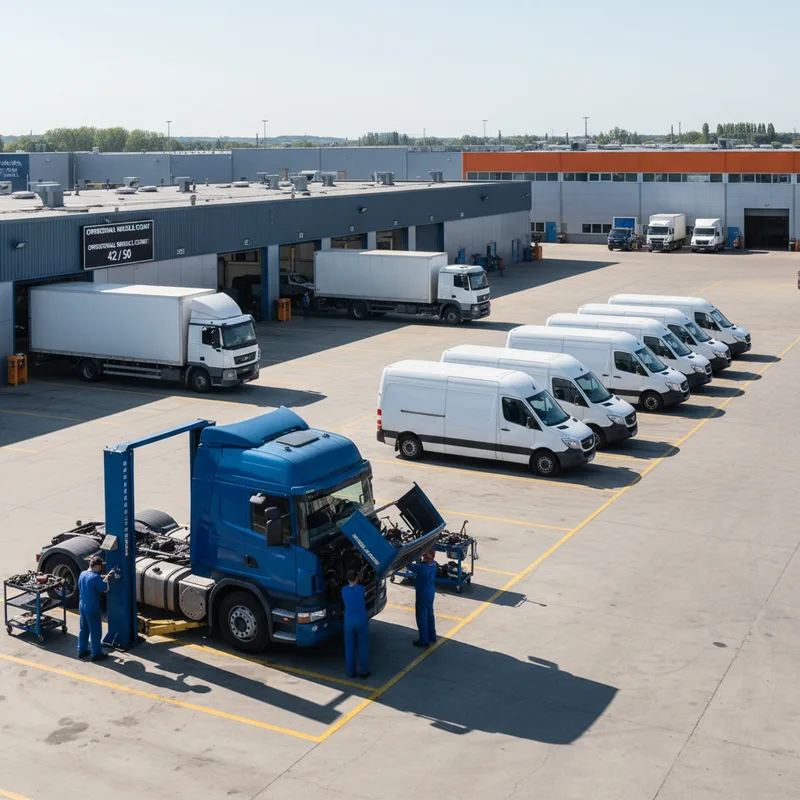
Common Fleet Damage Patterns and How to Prevent Them
After working on commercial vehicles for decades, you start to see the same damage show up again and again. It’s rarely random. Fleet damage follows patterns, and once you recognize those patterns, a lot of it becomes preventable.
Where Fleet Damage Actually Happens
Delivery vehicles in Jamaica, Queens take a beating from all directions. The routes here are demanding. Tight turns off Sutphin Boulevard, congested intersections near Jamaica Avenue, and the constant stop-and-go around the AirTrain terminal all create predictable collision points. Add in the loading dock environments where drivers are reversing blind or working in low-light conditions, and you’ve got a recipe for repeat damage.
The most common impact zones we see on fleet vehicles are:
-
Front bumpers and grilles from low-speed urban collisions and parking lot contacts
-
Rear bumpers and lift gates from dock backing incidents and merge accidents
-
Side panels and mirrors from narrow street clearance mistakes
-
Undercarriage components from potholes and road debris, which Queens roads deliver in abundance
A lot of fleet managers focus exclusively on major collisions. That’s a mistake. Minor body damage that goes unaddressed compounds. A dented panel with compromised paint starts to rust. A slightly bent bumper bracket throws alignment off on the next impact. Small damage turns into expensive structural problems faster on commercial vehicles because they absorb more daily stress than a personal car ever would.
Practical Prevention Strategies
Prevention isn’t complicated. It’s consistent.
Start with a post-shift walkaround policy. Drivers who know they’re accountable for documenting damage at the end of each day catch problems early. Pair that with a simple damage log so you can spot which routes or drivers are generating the most incidents. The FMCSA offers commercial vehicle safety resources worth reviewing for fleet operators building out formal safety programs.
Invest in backing cameras and proximity sensors if your vehicles don’t have them. Dock damage drops significantly with basic technology assists.
And when damage does happen, don’t delay repairs. A vehicle that needs a fleet collision repair service handled quickly is cheaper to fix and safer to operate than one that sits and waits. Reach out to us for a same-day estimate and we’ll get your vehicle assessed before the damage gets worse.
What to Look for in a Fleet-Ready Collision Repair Shop
Not every shop can handle fleet work. That’s a fact most business owners figure out the hard way, usually after a frustrating experience with a shop that treated their commercial vehicles like ordinary passenger cars.
Here’s what actually separates a capable fleet collision repair service from one that’s going to waste your time.
Certifications That Actually Matter
A lot of shops display certificates on the wall. Fewer actually earn them through ongoing training. Look specifically for I-CAR certification, which requires technicians to complete regular coursework to stay current with evolving vehicle technology. This matters more than ever now that commercial vehicles are loaded with sensors, cameras, and safety systems that need proper recalibration after any significant collision work.
ASE certification is worth checking for too. Together, these credentials tell you the shop isn’t cutting corners on training. ANA Auto Repair has held I-CAR certification since long before it became a marketing talking point, including aluminum welding certification that most shops in Queens simply don’t carry.
Insurance Partnerships and Claims Experience
Fleet managers in Jamaica, Queens deal with multiple carriers, multiple claims, and zero patience for delays. A shop that’s unfamiliar with commercial insurance workflows will slow everything down. You want a shop that’s already certified with major carriers and knows how to move a claim forward without you having to chase paperwork.
Our insurance certifications and carrier partnerships reflect years of working directly with adjusters and fleet accounts. That experience means fewer surprises between estimate and final bill.
A Fleet Coordination Checklist
Before you commit to any shop for your fleet collision repair service needs, ask these direct questions:
-
Can you handle multiple vehicles simultaneously without compromising turnaround times?
-
Do you provide written estimates the same day?
-
What warranty covers parts and labor on commercial repairs?
-
Do you use OEM parts, aftermarket, or a mix, and can you document that?
-
How do you communicate repair status to fleet managers during the process?
Honest communication is something a lot of shops underpromise on. A shop that gives you vague timelines and verbal estimates isn’t built for fleet work. Period.
Our full service capabilities are built around exactly these demands. If you’re managing commercial vehicles anywhere in Jamaica, Queens, reach out for a same-day estimate and see the difference that preparation makes.
Insurance and Fleet Repair: Understanding Your Options
Fleet managers often don’t realize how much leverage they actually have with insurance carriers. Many assume they have to send damaged vehicles wherever the insurer directs them. That’s not how it works.
You have the right to choose your own repair facility. Full stop. Your insurance policy covers the repair, not the shop. This matters especially for businesses running fleet collision repair service needs through multiple carriers, which is common among Jamaica, Queens companies that operate across different vehicle types and contract structures.
What Multi-Carrier Fleets Actually Deal With
A lot of fleet operators carry separate policies for different vehicle classes, cargo vans under one carrier, box trucks under another. That creates real coordination headaches when multiple vehicles are damaged in the same incident or around the same time. Chasing down adjusters across three different insurance companies while your vehicles sit idle isn’t a system, it’s a time drain.
Shops certified by major insurers can cut that friction down significantly. ANA Auto Repair holds certifications with carriers including Geico and Allstate, which means adjusters already know the shop’s work. Estimates move faster. Approvals come through with less back-and-forth.
What to Expect During the Claims Process
Before dropping off any vehicle, photograph existing damage. Keep written estimates on file. A shop that won’t provide a written estimate upfront is a shop worth avoiding, regardless of what an insurer recommends.
We’d also push back on the common advice to always accept the insurer’s preferred shop list without question. Those lists favor cost control. Thirty-plus years of certified work and a track record with commercial clients across Queens says something that a preferred vendor list simply doesn’t capture.
Ready to simplify your fleet claims process? Contact us for a same-day estimate.
Safety Systems and Modern Fleet Vehicles: A Critical Oversight
Most fleet managers never think about this. And that’s the problem.
Modern commercial vehicles, even the mid-range cargo vans and box trucks common in Jamaica, Queens, are packed with driver assistance technology. Lane departure warning, automatic emergency braking, forward collision alerts, blind spot monitoring. These systems rely on sensors and cameras that are precisely calibrated to factory tolerances. A fender bender that looks minor from the outside can knock those calibration settings completely off.
Here’s what concerns us most about the industry: a lot of shops simply don’t recalibrate after collision repairs. It’s not always intentional negligence. Some shops don’t have the equipment. Others don’t think a small repair warrants the step. But the National Highway Traffic Safety Administration has been clear that advanced driver assistance systems require proper recalibration after any structural or sensor-related repair. Skipping it doesn’t just void a feature. It can make the system behave unpredictably, or not respond at all when a driver needs it most.
For fleet operators, the liability angle matters just as much as the safety angle. If a driver is involved in a second accident and it surfaces that a safety system wasn’t recalibrated after prior repairs, that’s an exposure your business doesn’t want.
A thorough fleet collision repair service accounts for this step every time, not just on newer luxury vehicles. At ANA Auto Repair, recalibration is part of the repair process, not an afterthought. You can review our full range of services or reach out to discuss your fleet’s specific needs before the next vehicle comes in damaged.
Getting Your Fleet Back on the Road: The ANA Approach to Fleet Collision Repair
Fleet managers who’ve dealt with multiple shops eventually land on the same conclusion: coordination matters more than speed alone.
At ANA Auto Repair, we’ve been handling commercial vehicle repairs across Queens since 1994. Business owners from Jamaica, Queens drop their vehicles at our South Ozone Park shop and consistently tell us the same thing: they needed a shop that communicated clearly, moved efficiently, and didn’t cut corners on certified repairs. That’s exactly what we’ve built our process around.
Our same-day estimates get your fleet moving through the assessment phase fast. We document everything in writing, handle insurance coordination directly, and recalibrate safety systems as standard practice, not as an afterthought. Our full service capabilities cover frame repair, aluminum welding, and professional painting, all under one roof.
We’re an approved shop for major carriers, which simplifies claims for fleet operators managing multiple policies. And our I-CAR certifications mean the work meets manufacturer standards every time.
Don’t settle for a shop that treats your commercial vehicles like afterthoughts. Contact us today to schedule your fleet collision repair service estimate.
Frequently Asked Questions
How quickly can you repair a damaged fleet vehicle?
We prioritize same-day estimates so your fleet manager knows what to expect right from the start. Simple repairs like bumper replacements or panel work can often be completed within a few days. More involved jobs, like frame straightening or aluminum welding, naturally take longer. We give you a realistic timeline upfront and keep you updated throughout the process. Our goal with every fleet collision repair service is to get your vehicle back on the road without unnecessary delays.
Do you work with commercial insurance carriers for fleet claims?
Yes, we do. ANA Auto Repair is certified with Geico Xpress and Allstate’s Good Hands network, and we work with a range of other commercial carriers as well. We handle the insurance coordination directly on your behalf, so your team doesn’t have to get buried in paperwork. You focus on keeping operations running, and we’ll manage the claims process. Businesses in Jamaica, Queens, NY, USA trust us to make this part of the repair experience as smooth as possible.
Can you repair multiple vehicles at the same time?
Absolutely. Our facility in Jamaica, Queens, NY, USA is equipped to handle multiple vehicles at once, and our team is experienced with managing concurrent fleet jobs. Before we get started, we sit down with fleet managers to talk through scheduling and capacity so repairs are coordinated in a way that minimizes your overall downtime. Whether you bring in two vehicles or several, we’ll build a plan that works for your operation.
What happens if a fleet vehicle needs frame or aluminum welding repair?
We’re fully equipped for it. ANA Auto Repair is I-CAR certified for aluminum welding and has complete frame and unibody repair capabilities on site. We don’t just fix what’s visible. We do a thorough inspection for hidden structural damage that often shows up after a collision. Every structural repair we perform is held to factory specifications, so the vehicle is genuinely safe before it goes back into service. Our fleet collision repair service covers the full scope of what your vehicles might need.
Why is recalibrating safety systems important after a collision?
Fleet vehicles today rely heavily on systems like lane assist, automatic emergency braking, and collision avoidance technology. Even a minor impact can knock these systems out of calibration without any obvious signs. If those systems aren’t working correctly, you’re looking at real safety and liability risks for your drivers and your business. That’s why recalibration is a standard part of our repair process, not something we leave as an afterthought. We make sure every system is verified before the vehicle leaves our shop.
Get Your Fleet Back on the Road Fast
If one of your fleet vehicles is out of commission, every hour it sits in a lot costs you money, and we know that better than anyone here in Jamaica, Queens, NY, USA. At ANA Auto Repair, we offer same-day estimates for fleet collision repair so you can make smart decisions quickly and keep your business moving.
We work efficiently, communicate clearly, and treat your fleet like it’s our own. See what our customers are saying on Google and find out why local businesses trust us with their vehicles.
Call us today, schedule your fleet repair service, or stop by our shop. We’re ready to help you minimize downtime and get your operation back on track.