


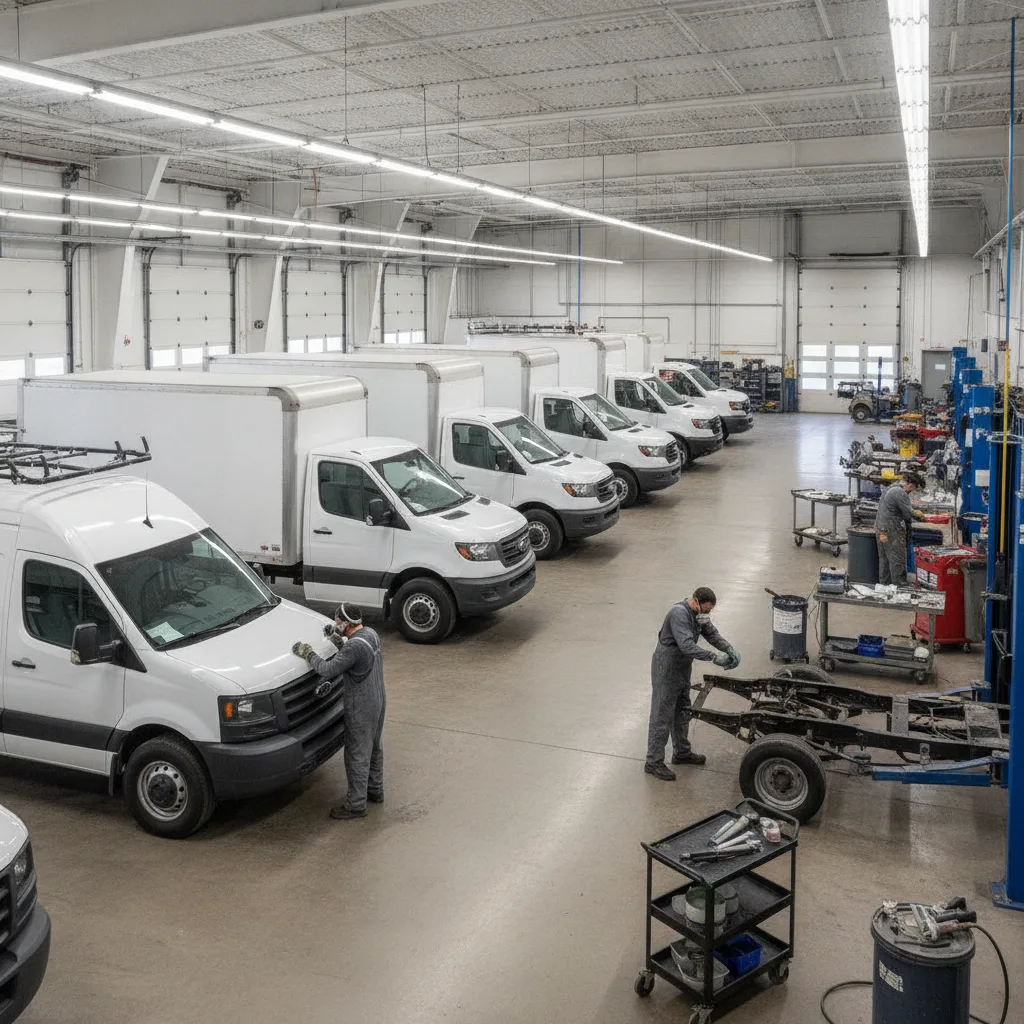
Fleet Auto Body Repair and Commercial Collision Services in Richmond Hill, Queens
Why Commercial Fleets Need Specialized Collision Repair
A delivery van operating out of Richmond Hill clips a bollard backing into a loading dock off Woodhaven Boulevard. The damage looks minor from the outside, a crumpled rear quarter panel and a bent bumper. But the driver is scheduled on a full route the next morning, and the vehicle is one of seven in a small logistics operation that can’t afford to have anything sitting idle.
That’s a real situation fleet operators face regularly. And it exposes a gap that a lot of businesses don’t anticipate until they’re already in it.
General auto body shops are built around individual customers, one car, one claim, one repair timeline. That model works fine for a commuter who drops off their sedan and waits a few days. It doesn’t work for a company running commercial vehicles that generate revenue every single day they’re on the road.
Fleet auto body repair requires a fundamentally different approach. The stakes are higher. The vehicles are often larger or more complex. There may be multiple units damaged in a single incident. And the business owner is tracking costs across an entire operation, not just a single repair invoice.
There’s also a technical layer that gets overlooked more often than it should. Commercial vehicles, particularly newer models, carry the same advanced driver assistance systems as passenger cars. Collision sensors, lane departure warnings, automatic braking. A shop that fixes the visible damage but skips the recalibration of those systems is leaving a safety problem that won’t show up until something goes wrong on the road. That’s not acceptable for any vehicle, and it’s especially problematic in a commercial context where liability runs deeper.
We’ve been doing collision repair work since 1994, and our shop in Queens serves fleet accounts across the borough, including businesses running routes through Richmond Hill, South Jamaica, and the surrounding commercial corridors. We’re not the right fit for every fleet, and we’re honest about that. But for operators who want I-CAR certified work, proper documentation, and a shop that understands what commercial downtime actually costs, the conversation is worth having.
Specialized fleet auto body repair isn’t a premium upgrade. It’s the baseline standard that commercial operators deserve. The next sections get into exactly what that looks like in practice.
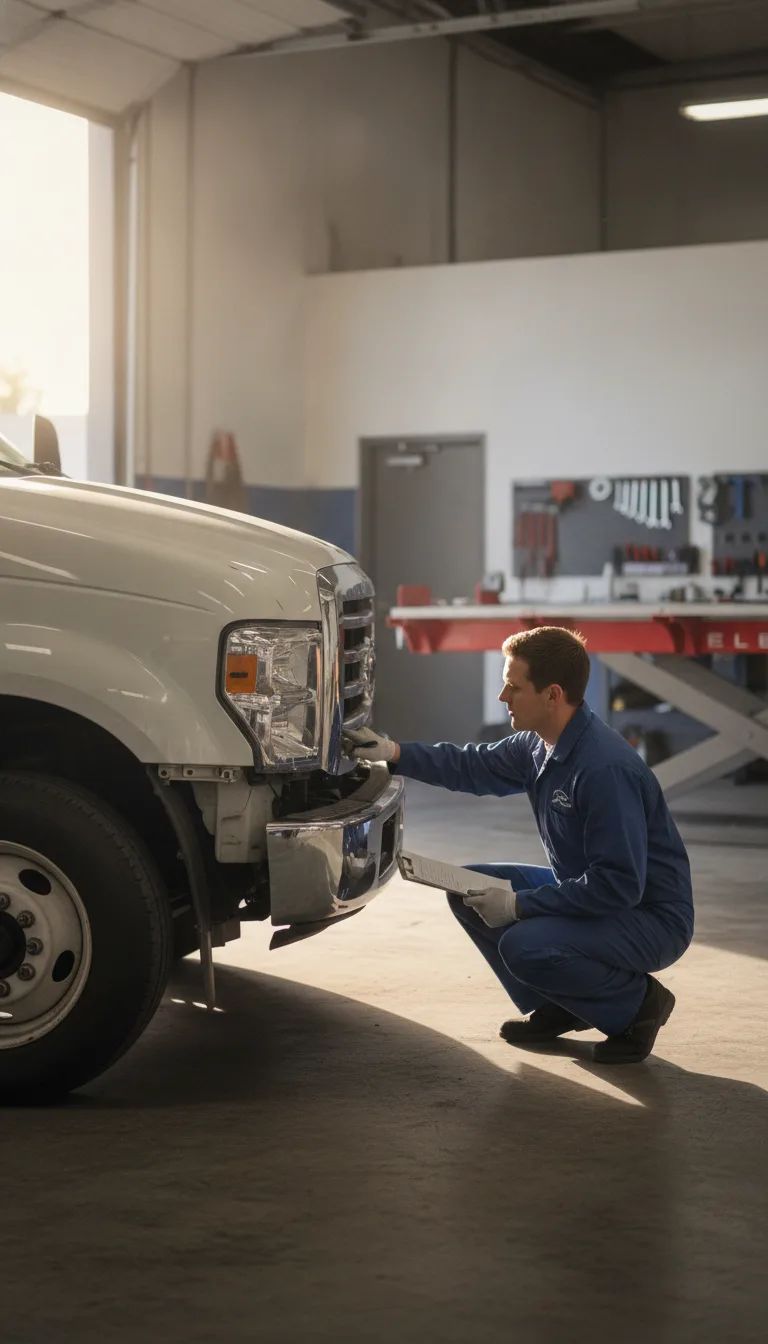
Minimizing Downtime: The Fleet Operator’s Critical Concern
Every day a vehicle sits in a repair bay is a day it’s not generating revenue. For commercial operators running routes through Richmond Hill, Queens and the surrounding neighborhoods, that’s not an abstract concern. It’s a direct hit to the bottom of your ledger.
This is where fleet auto body repair requires a fundamentally different approach than standard retail collision work. A shop that’s perfectly competent handling one car at a time can still completely fail a fleet operator if it doesn’t have the scheduling infrastructure, staffing, or parts relationships to process multiple vehicles without creating a bottleneck.
Same-Day Estimates Matter More Than People Admit
A lot of operators underestimate how much time gets lost just waiting for a written estimate. You call around, describe the damage over the phone, get vague numbers, and then spend two days coordinating vehicle drop-offs before any actual repair work begins. That delay compounds fast across a multi-vehicle operation.
At ANA Auto Repair, we provide same-day estimates. Bring the vehicle to our South Ozone Park facility, and our team assesses the damage and gets you a written quote the same day. No waiting, no guessing.
We’ve been doing this since 1994, and one thing experience has taught us: the shops that think a verbal estimate is good enough are the ones that create problems later. Always get it in writing. Contact our fleet specialists to schedule your estimate and see the difference a structured intake process makes.
Scheduling That Works Around Your Operation
Fleet downtime is a logistics problem as much as a mechanical one. You need to coordinate which vehicles go in, in what order, without stranding drivers or missing contracted deliveries. That requires a repair partner who communicates clearly and meets deadlines.
Our team works with commercial operators to phase repairs when possible, prioritizing the units that are most critical to daily operations. We also have the capacity to handle bulk repair work without pushing individual vehicles to the back of the line indefinitely. Richmond Hill fleet operators get the same level of service and priority coordination we provide across all of Queens.
There’s a common assumption that bigger shops automatically mean faster turnaround. That’s not always true. Throughput depends on organization, parts procurement, and technician scheduling, not just square footage. A properly credentialed shop with disciplined workflow management will consistently outperform a larger operation running on chaos.
Getting your fleet back on the road quickly isn’t luck. It’s process. And that process starts the moment you reach out to discuss your commercial repair needs.
ANA Auto Repair’s Fleet-Ready Certifications and Capabilities
Most shops can patch a bumper. Fewer can tell you whether the frame behind it shifted two millimeters on impact, or whether the lane-keep assist system on a newer delivery van needs recalibration after the repair. That gap in capability is exactly why certifications matter for fleet auto body repair, not as wall decorations, but as proof that a shop invests in the technical training to handle what’s actually in front of them.
ANA Auto Repair holds I-CAR Gold Class certification, the industry’s most recognized standard for collision repair training. We’re also an I-CAR certified aluminum welding center, which matters more than ever as commercial vehicle manufacturers shift toward aluminum-intensive construction to cut weight. Aluminum doesn’t behave like steel. Welding it incorrectly compromises structural integrity in ways that don’t show up until a second impact.
Frame and unibody repair is another area where general shops often fall short. Hidden frame damage is one of the most commonly missed problems in collision work, and for a fleet vehicle that gets loaded and unloaded daily, an uncorrected frame means accelerated wear on tires, suspension, and cargo systems. Our frame repair capabilities cover both traditional steel frames and modern unibody structures.
Credentials extend to the insurance side as well. ANA Auto Repair is a Geico Xpress repair shop and part of the Allstate Good Hands Repair Network. For fleet operators managing multiple vehicles under commercial policies, that kind of carrier relationship cuts down on back-and-forth approvals and gets repair authorizations moving faster. You can review our full list of insurance partnerships here.
We’ve been doing this since 1994. That history means our technicians have worked through changes in vehicle construction that younger shops have never encountered firsthand. Commercial operators in Richmond Hill, Queens deserve a repair partner who understands that. Reach out to discuss your fleet’s specific needs and get a same-day estimate.
Common Fleet Repair Mistakes and How to Avoid Them
Cut-rate repairs catch up with you. Fleet operators running vehicles through Richmond Hill, Queens and across the borough know this firsthand, often after a second collision reveals damage from the first one was never properly addressed.
The most common shortcuts in fleet auto body repair tend to cluster around the same problem areas, and they’re worth knowing by name.
Inadequate Surface Preparation
Skipping proper surface prep is the fastest way to produce a repair that looks fine for three months and then starts peeling. Some shops rush this step because it isn’t visible work. The customer doesn’t see it, so they figure it won’t be noticed. It gets noticed. Paint adhesion depends entirely on what happens beneath the topcoat, and a van running a daily route through Queens weather will expose weak prep faster than most.
Missed Frame Damage
A crumpled quarter panel sometimes signals nothing more than a crumpled quarter panel. But often there’s stress transferred to the frame or unibody that a visual inspection won’t catch. We use measuring systems to verify frame geometry after every significant collision repair, because overlooked frame damage doesn’t stay hidden. It shows up in tire wear, handling, and eventually in the next inspection.
Skipped Alignment Checks
This one is genuinely underestimated. A shop completes the body work, the vehicle looks right, and it goes back into rotation without an alignment check. Weeks later the fleet manager notices uneven tire wear. That’s a predictable outcome when alignment isn’t verified post-repair, not a mystery.
Safety System Recalibration Failures
Newer commercial vehicles carry advanced driver assistance systems that need recalibration after collision work, even seemingly minor repairs. Lane assist, automatic emergency braking, and forward collision warning sensors can be knocked out of spec by bodywork that shifts a panel a fraction of an inch. Skipping recalibration is a liability waiting to happen.
At ANA Auto Repair, these aren’t optional steps. Our I-CAR certifications exist precisely because our training requires us to address all of it, not just what’s visible. Fleet operators in Richmond Hill deserve repairs done the full way, not the fast way.
Insurance Claims and Billing: Streamlined for Commercial Operations
Fleet managers deal with more paperwork than most people realize. A single incident can generate repair estimates, carrier correspondence, supplemental damage documentation, and billing disputes that drag on for weeks if the shop doesn’t know how to handle commercial claims efficiently.
That friction is avoidable.
ANA Auto Repair holds direct repair certifications with major carriers including Geico and Allstate, which cuts out a significant layer of back-and-forth. As a Geico Xpress repair shop and part of the Allstate Good Hands Repair Network, we have established workflows with both carriers that speed up approvals and reduce the chance of billing disputes holding up your vehicle.
One thing worth pushing back on: the idea that fleet operators should just let their insurance carrier assign a shop. Carriers will point you toward their preferred network, but you have the legal right to choose your own repair facility in New York. That matters when you’re managing multiple vehicles under different policies and need consistent documentation standards across every claim.
For commercial operators running routes through Richmond Hill, Queens and across the borough, consistent documentation is actually the bigger issue. We provide written, itemized estimates on every job. No verbal quotes, no vague line items. That kind of paper trail matters when you’re reconciling billing against multiple carriers or presenting repair costs to ownership.
Before any vehicle goes to a carrier, we recommend fleet managers photograph pre-existing damage and document current mileage. It’s a simple habit that prevents disputes later.
Our team has been handling commercial collision work since 1994. Reach out to discuss your fleet’s specific billing and claims requirements, and we’ll walk you through how we’ve structured the process for other Richmond Hill commercial operators.
Building a Long-Term Fleet Maintenance Partnership
Choose your repair partner before you need one. Fleet operators who scramble to find a shop after an incident end up making rushed decisions, and rushed decisions cost money.
A common piece of advice is to collect three quotes and pick the middle one. Honestly, that’s not great logic. Price tells you very little about whether a shop can handle commercial volume, keep accurate documentation, or communicate reliably with your insurance carrier. Those things matter more.
What to look for in a long-term partner:
-
Written estimates with clear part specifications (OEM versus aftermarket)
-
Warranty documentation on all completed work
-
Familiarity with commercial carrier billing and supplement processes
-
Consistent technician quality, not just one strong lead mechanic
ANA Auto Repair has been handling fleet auto body repair since 1994. That track record matters for commercial clients in Richmond Hill, Queens because consistency compounds over time. You get a shop that already knows your vehicles, your carriers, and your expectations.
We’re based in South Ozone Park and serve commercial operators throughout Richmond Hill and the broader Queens area. Contact our fleet specialists to discuss a service agreement and get a same-day estimate. Learn more about our certifications and history.
Frequently Asked Questions
Do you offer same-day fleet vehicle estimates in Richmond Hill?
Yes, we do. At ANA Auto Repair in Richmond Hill, Queens, NY, we know that every hour a commercial vehicle sits idle costs your business money. Just reach out with the details of the damage, whether that’s photos or a quick description, and we’ll prioritize getting your vehicle assessed the same day. You’ll receive a clear, written quote so there are no surprises and you can make decisions fast.
Can you handle multiple vehicle repairs simultaneously?
Absolutely. Our facility is built to handle fleet auto body repair at scale, not just one car at a time. We coordinate scheduling across multiple vehicles so your fleet moves through the shop efficiently without sacrificing the quality of each repair. If you manage a commercial fleet in Richmond Hill, Queens, NY, you’re welcome to come by the shop and we’ll walk you through how we structure the workflow to fit your operational schedule.
Are you certified to repair aluminum frames and modern vehicle materials?
Yes. ANA Auto Repair is an I-CAR certified aluminum welding center, which means we’re trained and equipped to handle frame and unibody repairs on modern vehicles. A lot of general shops don’t have the certifications or tools to do this type of work safely. For fleet auto body repair involving newer commercial vehicles built with advanced materials, you need a shop that’s qualified to handle the structural work correctly, and that’s exactly what we offer.
Do you work with commercial insurance carriers?
Yes, we work with major carriers including Geico Xpress and Allstate Good Hands, and we’re an approved repair facility with them. Dealing with insurance claims for a fleet can get complicated fast, so we handle the documentation and communication to make the process as smooth as possible for you. We provide detailed repair reports that support your claim and help speed up reimbursement so you’re not chasing paperwork.
What safety systems do you recalibrate after collision repair?
Modern commercial vehicles rely on a range of advanced driver assistance systems, things like lane departure warnings, automatic emergency braking, and adaptive cruise control. After any collision repair, these systems need to be properly recalibrated to work the way they’re supposed to. We handle that recalibration in-house, so when your vehicle leaves our shop in Richmond Hill, Queens, NY, it’s not just fixed cosmetically. It’s fully functional and safe for your drivers on the road.
Get Your Fleet Back on the Road with ANA Auto Repair
If your commercial vehicles are sitting idle due to collision damage, we’re ready to help. ANA Auto Repair serves fleet operators throughout Richmond Hill, Queens, NY, USA with certified repairs and same-day estimates so you’re not losing time or revenue waiting around.
Stop by, give us a call, or submit your fleet repair request online and we’ll get to work on a plan that fits your schedule and keeps your vehicles moving. Want to know what other fleet customers think of our work? Check out our reviews on Google and see why local businesses trust us with their fleets.
Contact ANA Auto Repair today and let’s get your Richmond Hill fleet back in service.