


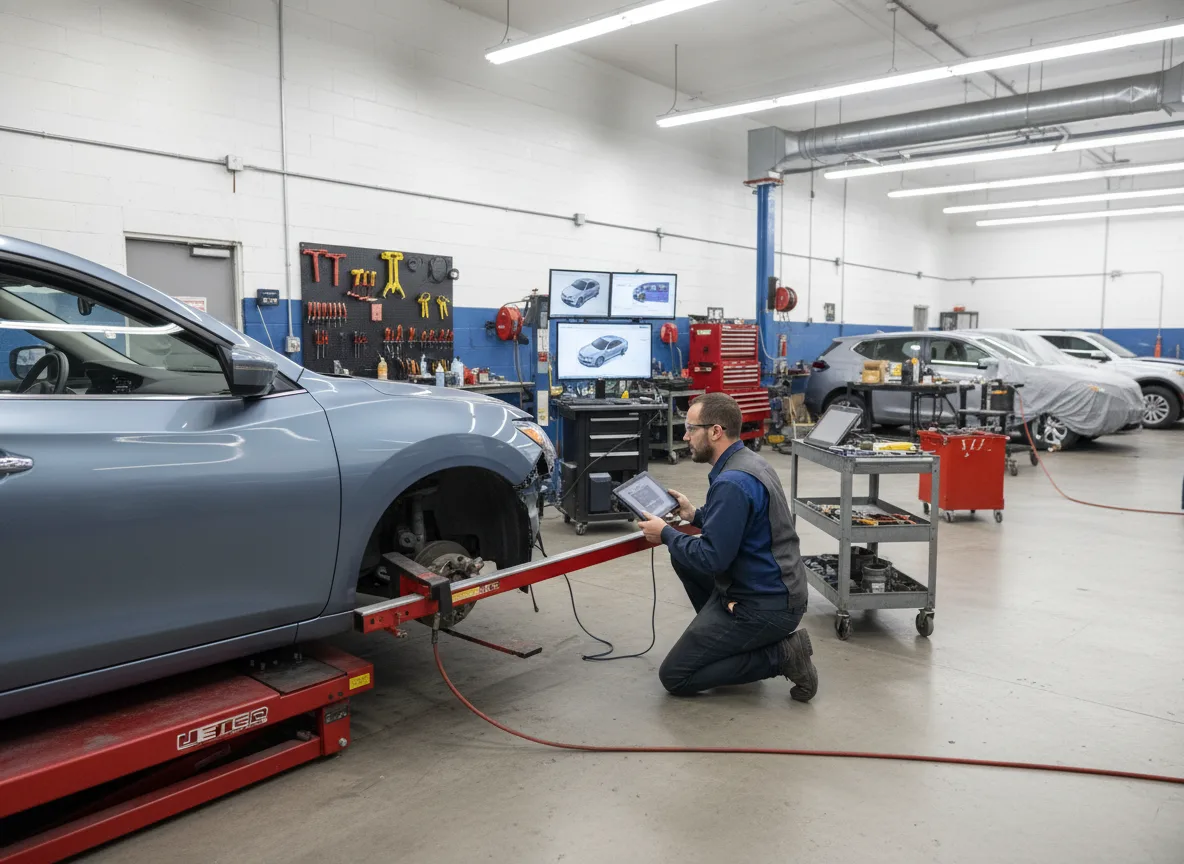
Finding a Certified Collision Repair Center in Queens, NY for Expert Accident Restoration
What Makes a Collision Repair Center Certified?
You’re driving home along Woodhaven Boulevard after a long day, and someone clips your rear quarter panel at an intersection. The damage looks straightforward enough, but you’re staring at a crumpled panel, a misaligned bumper, and no idea which shop you can actually trust. That moment, right there, is when the difference between a certified collision repair center and a standard body shop starts to matter.
Not every shop with a spray gun and a lift qualifies as certified. Certification isn’t just a framed document on the wall. It’s a structured set of training requirements, technical standards, and ongoing education that technicians must meet and maintain over time.
What Certification Actually Requires
The most widely recognized standard in the collision repair industry comes from I-CAR, the Inter-Industry Conference on Auto Collision Repair. I-CAR sets technical training benchmarks for every role in a shop, from estimators to welders to production technicians. A shop earns Gold Class status only when its entire team meets those role-specific training requirements, not just one or two people.
That distinction matters more than most drivers realize. A shop can have one highly trained technician and still produce inconsistent work if the rest of the team hasn’t kept pace. Certification holds the whole operation accountable.
There’s also a common misconception worth addressing: many people assume that any licensed auto body shop is automatically held to the same technical standard. That’s simply not accurate. Licensing covers legal operation. Certification covers craft. The two are entirely different things.
Why Ongoing Training Changes the Equation
Modern vehicles are genuinely complex. Aluminum-intensive construction, advanced driver assistance systems, and high-strength steel frames all require specific repair procedures. A technique that worked on a 2010 sedan can cause serious problems on a 2022 crossover. Certified shops train specifically for these evolving requirements, which means the repair your car receives reflects current manufacturer standards, not outdated habits.
This is why ANA Auto Repair, based in South Ozone Park and serving drivers across Queens, NY, holds both I-CAR Gold Class certification and I-CAR aluminum welding certification. Those credentials aren’t static. They require continuous renewal, which keeps the shop’s knowledge current with the vehicles actually on the road today.
Certification is the baseline. Everything else builds from there.
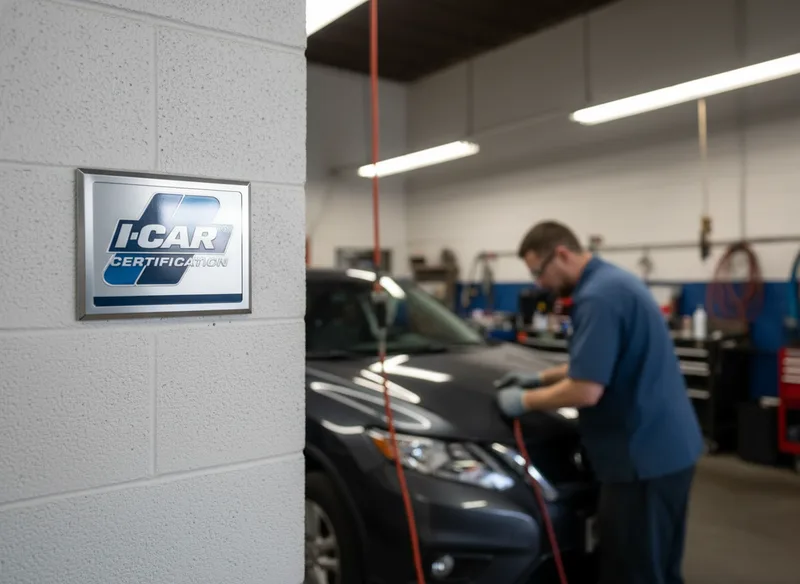
Why I-CAR Certification Matters for Your Accident Repair
Not all training programs are created equal. I-CAR (Inter-Industry Conference on Auto Collision Repair) is the industry’s leading technical training organization, and shops that earn I-CAR Gold Class status have demonstrated a sustained commitment to keeping their technicians current on evolving repair methods. That distinction genuinely changes what happens to your vehicle on the lift.
Here’s the part many customers don’t realize: collision repair has gotten significantly more complex over the past decade. Modern vehicles use high-strength steel, aluminum-intensive structures, and sensor-loaded safety systems. A technician trained on older methods can miss things that a properly certified one won’t.
Aluminum Welding Changes Everything
Aluminum requires a completely different approach than traditional steel repair. It’s more reactive, it work-hardens differently, and contamination from steel tools can cause premature corrosion inside a repair that looks clean on the surface. I-CAR aluminum welding certification means technicians have been trained and tested specifically on these challenges. At ANA Auto Repair, that certification is current, not something earned once and forgotten.
We’d push back on the common assumption that aluminum repairs are only relevant for luxury vehicles. Ford F-150s, Honda Hoods, and plenty of mid-range cars now use aluminum panels. If your shop isn’t certified for it, you may be getting a repair that looks fine for six months and then shows failure along the weld line.
Frame Straightening and Hidden Damage
Frame and unibody damage is frequently underestimated. A collision that appears to affect only body panels can transfer force through the vehicle’s structure in ways that aren’t visible without a proper inspection. I-CAR-trained technicians know to look for it. Skipping this step is one of the most common ways shops cut time, and it’s one that creates real safety problems down the road.
Safety System Recalibration After a Collision
This is the issue that surprises most Queens drivers we talk to. Lane departure systems, automatic emergency braking, and forward collision warning sensors are often mounted near the areas most affected by front and rear impacts. Even a bumper replacement can throw off calibration. A certified collision repair center with up-to-date I-CAR training will include recalibration as part of the repair process, not as an afterthought or an upsell.
If a shop doesn’t mention sensor recalibration during your estimate, ask about it directly. The answer will tell you a lot. Explore the full range of services at ANA Auto Repair to see how each repair step is handled with this level of attention, right here in Queens, NY.
Common Mistakes Uncertified Shops Make (And How to Spot Them)
Shops cut corners in predictable ways. After three decades in the trade, the same patterns show up repeatedly, and once you know what to look for, they’re not hard to spot before you hand over your keys.
One thing most car owners don’t realize: a low estimate isn’t always a bargain. It often signals that something important is being skipped. Here are the red flags that should give you pause.
-
Poor surface preparation. Rushing through prep work is the most common shortcut. Paint applied over improperly cleaned or unsanded panels will bubble, peel, or fade within a year. Ask the shop to walk you through their prep process. Vague answers are a warning sign.
-
Missed frame and unibody damage. Visible body damage is easy to spot. Structural damage underneath it is not. Shops without proper measurement equipment will miss bends or shifts in the frame that compromise your vehicle’s crash performance. If a shop doesn’t mention frame inspection as part of their assessment, that’s a problem.
-
No safety system recalibration. Modern vehicles have cameras, radar sensors, and driver-assistance systems tied directly to body panels and windshields. Even a bumper replacement can throw off automatic emergency braking or lane-keep assist. The IIHS has documented how uncalibrated ADAS systems create real safety risks. Many uncertified shops simply skip this step entirely.
-
No written estimate. If a shop won’t put the scope of work and pricing in writing, walk away. Full stop.
-
No warranty on the work. A shop that stands behind its repairs offers a written warranty. No warranty means no accountability.
A lot of advice tells you to get three quotes and pick the middle one. That’s too mechanical. What matters is whether the shop can explain their process clearly, show certifications, and back the work with a warranty.
Queens drivers have options. A true certified collision repair center in Queens, NY will answer every one of these questions without hesitation. If they can’t, keep looking. You can reach out to ANA Auto Repair to see exactly what a certified shop’s process looks like from estimate to final delivery.
How to Choose a Certified Collision Repair Center in Queens
Start with certifications. Before you call a shop or request a quote, check whether the facility holds I-CAR Gold Class status or any manufacturer-specific training credentials. A shop that can’t point you to documented certifications is telling you something important about how they operate. This isn’t about being picky. It’s about protecting a vehicle that may be worth tens of thousands of dollars.
Verify insurance partnerships next. If you carry Geico or Allstate coverage, working with a shop that holds direct repair designations from those providers simplifies your claim considerably. You won’t be bouncing between adjusters and repair advisors trying to reconcile competing estimates. ANA Auto Repair’s insurance partnerships page lays out exactly which carriers the shop works with, so you can confirm compatibility before you even drop off the vehicle.
Here’s where a lot of common advice goes sideways: many people are told to get three written estimates and choose the lowest. That’s incomplete guidance. A surprisingly low bid often means someone is planning to skip steps, use substandard parts, or rush the job through. Gather the estimates, yes, but compare the line items, not just the totals. Ask what parts are being used. OEM parts are manufactured to the same specifications as your original components. Aftermarket parts vary widely in quality. For structural repairs especially, that difference matters.
Ask directly about the warranty. A reputable certified collision repair center will back its work in writing, typically covering both parts and labor. If a shop hesitates or gives you a vague answer, that’s your cue to keep looking. Warranty conversations shouldn’t feel uncomfortable. Any shop confident in its own workmanship will answer that question without flinching.
Read the reviews carefully. Not just the star rating, but the actual written responses. Look for comments about how the shop communicated during the repair, whether the finished work matched expectations, and how they handled any problems that came up. For Queens drivers, that community context matters. Shops that have been serving neighborhoods like South Ozone Park, Richmond Hill, and Ozone Park since 1994 tend to have a real track record you can evaluate. ANA Auto Repair’s history reflects that kind of long-standing local accountability.
Finally, confirm the repair timeline upfront. A shop that won’t give you even a rough estimate of how long the work will take is one that hasn’t actually assessed your vehicle properly. Same-day estimates are standard at a well-run facility. Contact ANA Auto Repair to schedule a walk-in assessment at the South Ozone Park location, and you can see the operation firsthand before committing to anything.
Your right to choose your own shop is protected. Use it wisely.
Insurance Claims and Your Certified Repair Center Partnership
Most drivers don’t realize they have the right to choose their own shop. Your insurer can recommend a preferred facility, but that recommendation carries no legal weight. You decide where your car gets repaired, full stop.
This distinction matters more than most people give it credit for. Insurance companies build networks around cost control, not necessarily repair quality. A certified collision repair center may cost slightly more per labor hour than a shop on your insurer’s preferred list, but the difference in documentation, process, and accountability is significant.
Working with a certified shop also simplifies the claims process considerably. At ANA Auto Repair, our certifications with Geico and Allstate, among others, mean our team communicates directly with adjusters, handles the paperwork, and flags any supplemental damage that appears once disassembly begins. That back-and-forth between shop and insurer is where delays usually happen, and having an established relationship cuts through most of it.
There are a few things worth doing on your end before dropping off the vehicle. Take photos of every angle of the damage and any pre-existing marks. Remove valuables. Get your estimate in writing before authorizing any work. A shop that resists putting anything in writing is a shop you should walk away from, regardless of how friendly the counter staff seems.
One opinion that runs counter to common advice: don’t prioritize speed when choosing a shop through an insurance claim. Plenty of shops advertise fast turnarounds, and that pressure often translates into skipped steps, specifically missed frame checks and uncalibrated safety systems. Modern vehicles in Queens, NY need post-repair ADAS recalibration. That’s non-negotiable.
Good documentation protects you if a dispute arises later. A certified shop keeps records of parts used, repair procedures followed, and any insurer correspondence. That paper trail has real value.
Why ANA Auto Repair Stands Out as a Certified Collision Repair Center in Queens
We’ve been repairing cars in Queens since 1994. That’s not a marketing line. It means we’ve worked on vehicles belonging to families from South Ozone Park, Richmond Hill, Jamaica, and Howard Beach for over three decades. Neighbors refer neighbors to us. That kind of trust doesn’t come from advertising.
ANA Auto Repair holds I-CAR Gold Class certification, which is the collision repair industry’s most recognized training standard. We’re also an I-CAR certified aluminum welding center, which matters more than most people realize. Aluminum frames and body panels are now common across a wide range of vehicles, and welding them incorrectly compromises structural integrity in ways that don’t always show up until a second accident. Most shops in Queens simply aren’t equipped for it.
Our PPG authorization means every paint job uses a professional-grade system with precision color matching. You won’t get a close approximation. You’ll get a match that holds up under sunlight on the Cross Bay Boulevard and looks the same two years later.
We hear a lot of advice telling drivers to always get three estimates before committing to a shop. Honestly, that’s reasonable, but it’s incomplete advice. A written estimate only tells part of the story. The more important question is whether the shop has the credentials and equipment to do the job correctly, not just cheaply. A low bid from an uncertified facility isn’t a bargain.
As a certified collision repair center recognized by both Geico and Allstate, we handle the insurance process directly. No bouncing between adjusters and shop managers. Our insurance partnerships mean the paperwork moves faster and you spend less time on the phone.
Same-day estimates are standard here. Walk in, get a real written assessment, and leave knowing exactly what the repair involves. Our full range of services covers everything from frame and unibody repair to bumper replacement and professional auto painting.
If you’re in Queens and dealing with accident damage, stop by our South Ozone Park location or reach out to schedule an estimate. Learn more about who we are and what we’ve built here over the past 30 years.
Frequently Asked Questions
What is I-CAR certification and why does it matter for collision repair?
I-CAR stands for Inter-Industry Conference on Auto Collision Repair. It’s a nationally recognized training program that covers advanced repair techniques like frame straightening, aluminum welding, and safety system recalibration. When a certified collision repair center employs I-CAR trained technicians, you can trust that the work follows current industry standards and factory specifications. That matters because modern vehicles are more complex than ever, and cutting corners on training leads to repairs that don’t hold up or, worse, compromise your safety on the road.
Can I choose my own collision repair shop, or do I have to go where my insurance directs me?
You absolutely have the right to choose your own shop. Your insurance company may recommend a preferred facility, but that’s just a suggestion. In Queens, NY, USA, drivers often don’t realize they’re free to bring their vehicle to any certified collision repair center they trust. That said, it does help to work with a shop that’s authorized by major insurers like Geico and Allstate. It streamlines the claims process and means less back-and-forth for you. At ANA Auto Repair, we work directly with most major carriers.
What questions should I ask a collision repair center before dropping off my car?
Good questions to ask upfront include: Are your technicians I-CAR or ASE certified? Do you use OEM or aftermarket parts? What warranty do you offer on repairs? How long will the job take? Can you recalibrate ADAS and other safety systems after the repair? You should also request a detailed written estimate before you authorize any work. Any reputable certified collision repair center in Queens, NY, USA will answer these questions clearly and won’t pressure you to skip the paperwork.
What are the biggest warning signs that a body shop is cutting corners?
Be cautious if a shop refuses to give you a written estimate, offers no warranty on their work, or quotes a price that seems way too low compared to everyone else. Low bids often mean substandard parts or skipped steps. You should also watch out for shops that don’t mention hidden frame damage or skip safety system recalibration after a collision. At ANA Auto Repair, a certified collision repair center serving Queens, NY, USA, we walk you through every step of the repair so you know exactly what’s being done and why.
Get Your Vehicle Restored Right Here in Queens, NY, USA
At ANA Auto Repair, we’ve been bringing cars back to factory condition since 1994, and we treat every vehicle like it’s our own. If you’ve been in an accident, stop by our South Ozone Park facility and we’ll get you a same-day estimate so you can move forward without the guesswork. We’re a certified collision repair center, and you can see what our customers are saying on Google before you even walk through the door.
Call us today or visit the shop and let’s get your car back on the road the way it should be.