


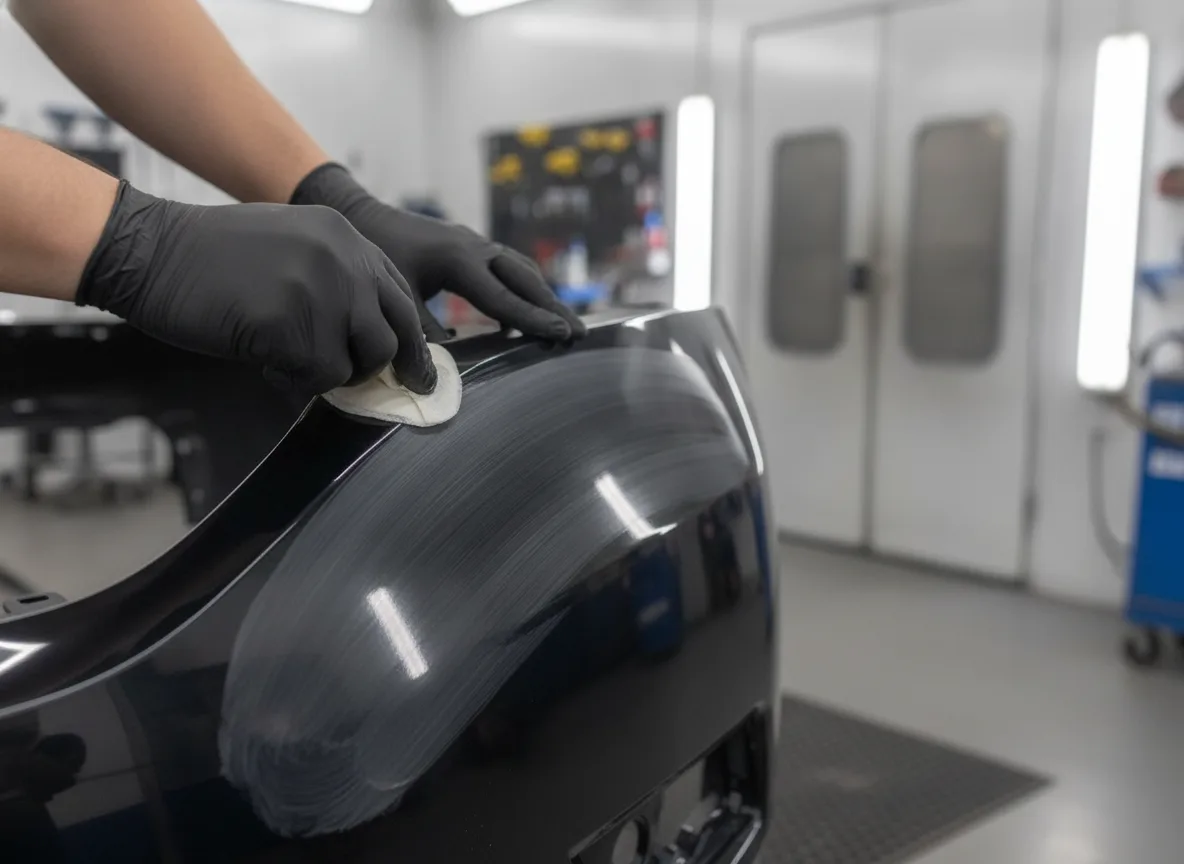
Bumper Repair and Replacement Excellence for Jamaica, Queens Vehicles
Why Bumper Damage Demands Professional Attention
A driver pulls out of the Jamaica Center parking garage on Archer Avenue, hears that familiar crunch, and steps out to find a cracked rear bumper with the fascia pulling away from the quarter panel. It looks like a cosmetic problem. It probably isn’t.
Bumpers are engineered components. They’re designed to absorb and redirect impact energy, protecting the radiator, hood latch, headlight assemblies, and the structural frame behind them. That plastic fascia you see is just the outer layer. Behind it sits an energy absorber and a reinforcement bar that both take the hit so your frame doesn’t have to.
Here’s the professional opinion most shops won’t volunteer: a bumper that looks fine after a low-speed collision can still be compromised. The energy absorber behind the fascia is a one-time device. Once it’s been compressed, it won’t perform the same way in a second impact. Plenty of drivers in Jamaica, Queens get a quote based on the visible crack and skip any assessment of what’s underneath. That’s a mistake that can affect how the vehicle holds up in the next accident.
DIY repair kits sold online are tempting, especially for minor surface cracks. They’re fine for touch-ups on a beater you don’t care about. On a daily driver you’re depending on for safety, they don’t address structural integrity, they rarely achieve a clean color match, and they do nothing to evaluate hidden damage to sensors or mounting brackets.
Modern bumpers also house backup cameras, parking sensors, and radar modules for collision avoidance systems. A crack or improper repair can misalign those components without triggering any warning light. According to the National Highway Traffic Safety Administration, rear visibility technology has a direct impact on preventing low-speed accidents. Disturbing that equipment during a sloppy bumper repair and replacement job can quietly reduce your vehicle’s safety margin.
That’s why a proper damage assessment matters before any repair decision gets made. At ANA Auto Repair, we’ve been doing this since 1994, and the cars we see most often with hidden bumper damage are the ones where someone tried to handle it cheap the first time.
Get it assessed correctly. Reach out for a same-day estimate and know exactly what you’re dealing with before making any repair decisions.
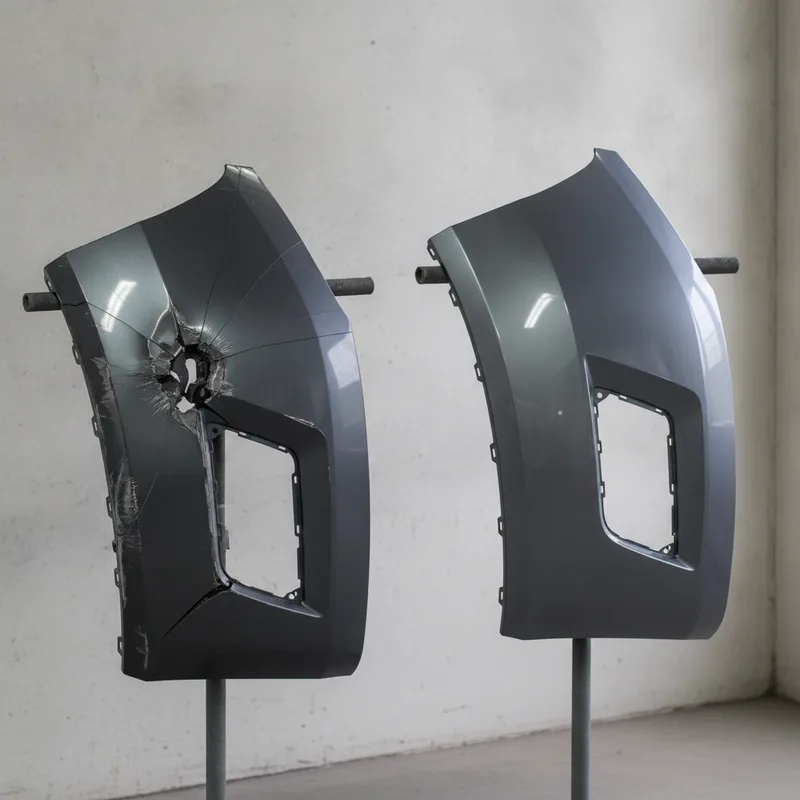
Bumper Repair vs. Replacement: Making the Right Choice
Not every cracked or scuffed bumper needs to come off the car. That’s a point a lot of shops don’t make clearly enough, because replacement tends to cost more. The honest answer is that the right call depends on a few specific factors, and getting them wrong in either direction costs you money.
Here’s how we think through it at ANA Auto Repair when a Jamaica, Queens driver brings us a damaged bumper.
When Repair Makes Sense
Surface-level damage is usually repairable. Shallow scratches, minor scuffs, small cracks that haven’t compromised the bumper’s structural shape, and paint transfer from a low-speed contact are all candidates for skilled repair rather than full replacement. The bumper fascia on most modern vehicles is made from thermoplastic materials that respond well to heat reshaping and adhesive bonding when the damage is contained.
Cost matters too. A quality repair on a superficially cracked plastic fascia typically runs significantly less than sourcing and installing a new part. If the bumper still sits flush, holds its mounting points, and shows no signs of backing or energy absorber damage, repair is usually the smarter financial choice.
When Replacement Is the Right Call
Some damage crosses a line. Deep structural fractures, missing sections, damage that has deformed the energy absorber or the foam impact block behind the fascia, and any collision that may have compromised the bumper beam itself all push the decision toward replacement.
A bumper that looks salvageable on the surface can be hiding real problems underneath. This is one area where hands-on inspection experience matters. A technician who has done bumper repair and replacement work for decades reads the damage differently than someone going off appearance alone.
Vehicle age and paint matching also factor in. On an older car with sun-faded paint, blending a repair seamlessly across a bumper panel takes real skill. On a newer vehicle, a clean replacement with a fresh paint match is sometimes the cleaner path, particularly if insurance is covering it.
The Material Question
Steel bumpers on older trucks and SUVs follow different rules than the plastic fascias on most passenger cars. Aluminum components, increasingly common on newer models, require specific repair techniques and shouldn’t be treated the same way as thermoplastic. Knowing the material you’re working with shapes every decision that follows.
Before any Jamaica, Queens vehicle owner commits to a direction, get the damage assessed properly. Reach out for a same-day estimate and let the inspection drive the decision, not assumptions about what the repair should cost.
Our Bumper Restoration Process at ANA Auto Repair
Most bumper jobs that come back with problems weren’t done wrong at the finish line. They were done wrong at the start. Surface prep and thorough inspection are where quality is either built in or skipped over, and you usually don’t find out which until weeks later.
At ANA Auto Repair, we’ve been working through this process since 1994, and the workflow we use today reflects what we’ve learned about where shortcuts actually cost people. Drivers coming to us from Jamaica, Queens get the same structured approach we apply to every vehicle, regardless of how straightforward the damage looks on the surface.
Step One: Damage Assessment Before Anything Else
We start with a full inspection. That means checking the bumper cover, the energy absorber behind it, the reinforcement bar, and the mounting brackets. A crack in the fascia is visible. Damage to the impact absorber usually isn’t, and that’s the component that matters most in a secondary collision.
We also check for frame distortion. A bumper hit that looks minor can transfer enough force to shift mounting points by a few millimeters, which affects how the new part sits and how the vehicle performs in a future impact. This is part of every bumper repair and replacement assessment we do, not an upsell.
Step Two: Material Selection and Preparation
Once we know exactly what’s damaged, we determine whether the bumper cover can be restored or needs to come off entirely. For repairs, the plastic substrate gets cleaned, sanded, and prepped with adhesion promoter before any filler or bonding agent goes on. Skipping that step is exactly how repairs bubble and peel within a season.
For replacements, we discuss part selection with the customer directly. OEM parts fit the way the original did. Aftermarket parts vary, and we’re straightforward about that. You can read more about how we approach those conversations and what our certifications mean for quality on our about page.
Step Three: Repair or Installation
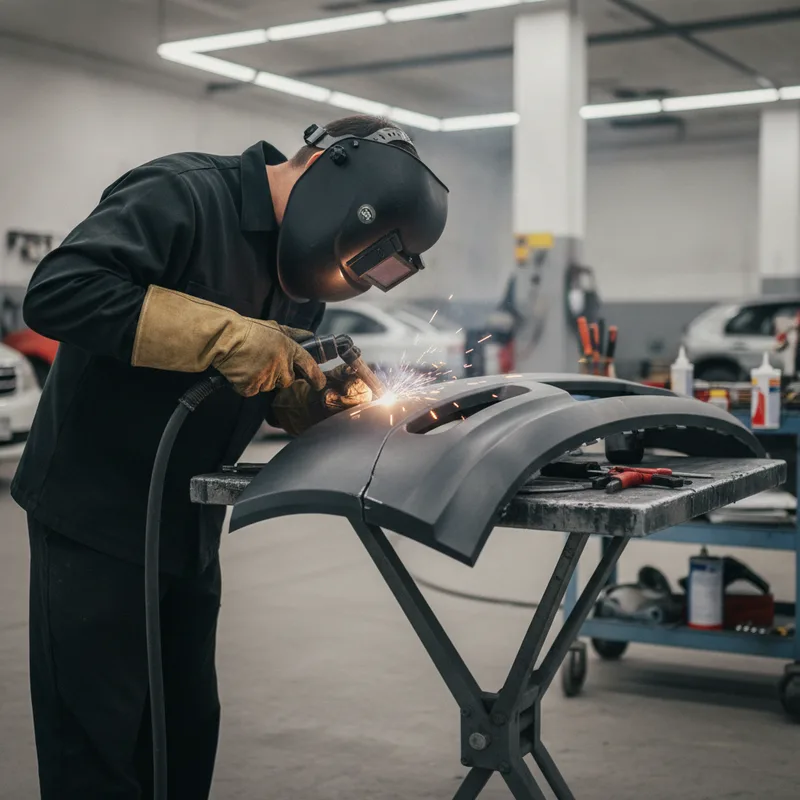
Plastic welding and two-part flexible bonding compounds each have situations where they work better. We use both, depending on the damage type and the material. Thermoplastic bumpers weld well. Some urethane blends bond better than they weld. Knowing the difference matters.
As an I-CAR certified shop, our technicians have the formal training to make that call correctly, not just by habit.
Step Four: Paint Matching and Final Finish
This is where a lot of shops lose the job visually. As a PPG authorized paint center, we use computerized color matching against your vehicle’s actual paint, accounting for age and fade. The goal is a repair you genuinely can’t spot from ten feet away.
If you’re in Jamaica, Queens and want to talk through your specific damage, reach out for a same-day estimate. We’ll tell you exactly what we’re looking at and why.
Common Bumper Damage Mistakes to Avoid
Most bad bumper repair and replacement jobs don’t fail because of one big mistake. They fail because of several small ones stacked on top of each other. Knowing what those are puts you in a much better position to ask the right questions before any work begins.
Skipping Surface Preparation
Poor prep is the single most common technical shortcut in this industry. If the surface isn’t cleaned, sanded, and properly primed before paint is applied, the finish will look fine for a few weeks and then start peeling or bubbling. We see it constantly on cars that come to us after having work done elsewhere. There’s no shortcut around this step.
Missing Hidden Structural Damage
A bumper impact that looks cosmetic on the outside can compress the foam energy absorber or bend the bumper beam underneath. Both components affect how your car performs in a subsequent collision. Any shop that skips removing the fascia entirely to inspect what’s behind it is cutting a corner that matters.
Forgetting Safety Sensor Recalibration
This one surprises a lot of drivers. Many modern vehicles have advanced driver assistance systems with sensors mounted directly in or near the bumper. Replacing the bumper without recalibrating those sensors can disable automatic emergency braking or throw off parking assist readings. It’s a real safety issue, not a technicality.
Accepting a Vague Estimate
Honestly, a surprisingly low bid should make you nervous, not relieved. If a shop can’t tell you in writing exactly what parts they’re using, whether they’re OEM or aftermarket, and what labor is included, that’s a problem. Get your estimate in writing and read it carefully before agreeing to anything.
Drivers in Jamaica, Queens bringing us their vehicles can expect every one of these checkpoints covered before work begins.
Material Choices: OEM, Aftermarket, and Insurance Considerations
Parts selection is where a lot of bumper repair and replacement jobs quietly go sideways. Not because shops are careless, but because the conversation between the shop, the customer, and the insurance company doesn’t always happen clearly enough before the work begins.
Modern bumpers aren’t one thing. Depending on your vehicle, the bumper assembly could include injection-molded thermoplastic, fiberglass composite, aluminum reinforcement bars, or a combination of all three. Each material behaves differently under impact, bonds differently during repair, and has specific finishing requirements. Getting that wrong affects both durability and paint adhesion.
OEM vs. Aftermarket: What the Difference Actually Means
OEM parts come directly from your vehicle’s manufacturer. They’re built to the same specifications as what came on the car originally. Aftermarket parts are produced by third-party suppliers and vary considerably in quality. Some aftermarket bumper covers fit well and finish cleanly. Others arrive with inconsistent panel gaps, slightly different contours, or surface textures that make paint matching harder than it needs to be.
The honest professional opinion here: aftermarket isn’t always a compromise, but it depends heavily on the brand and the specific vehicle. For late-model vehicles with complex bumper geometry and integrated sensor housings, OEM is usually the better call. For older or simpler assemblies, a quality aftermarket part can do the job.
Insurance companies will often push toward aftermarket parts to control costs. That’s their right, but you have the right to know what’s going in on your car and to ask questions. Many drivers in Jamaica, Queens don’t realize they can push back on parts selection, especially if an OEM part is reasonably priced. Our team walks through this during every estimate. You can see the insurance partnerships we maintain, including Geico and Allstate, which gives us real leverage in these conversations.
Warranty coverage is also tied to this choice. OEM parts typically carry a manufacturer warranty. Aftermarket warranty terms vary. At ANA Auto Repair, we’re transparent about both before anything is ordered. Reach out for a same-day estimate and we’ll put every parts decision in writing before work starts.
Why Jamaica, Queens Drivers Choose ANA Auto Repair for Bumper Work
We’re based in South Ozone Park, not Jamaica. That’s worth saying plainly. But we’ve been serving Jamaica, Queens drivers for over 30 years, and the distance between our shop and your neighborhood is genuinely short. Drivers come to us regularly from along Woodhaven Boulevard, from neighborhoods near Rochdale Village, from all across the southeast Queens corridor.
The question isn’t how close we are. It’s whether the shop you choose actually knows what it’s doing.
Since 1994, ANA Auto Repair has built its reputation on certified work and honest communication, not on convenience or low-ball pricing. We hold I-CAR certification, which covers both collision repair and aluminum welding. That’s not a minor credential. I-CAR training is updated continuously to keep pace with how vehicles are actually being built today, and a lot of shops skip it because it takes real time and commitment to maintain.
Our PPG authorized paint center status means your bumper doesn’t come back close to matching. It comes back matching. Color precision matters more on modern vehicles than most people realize, especially with today’s tri-coat and pearl finishes. We use PPG’s computerized mixing systems to get it right the first time.
Many drivers don’t realize they can choose their own shop regardless of what their insurer recommends. That said, working with a shop that already has established relationships with major carriers does make the process easier. We’re a Geico Xpress repair shop and part of the Allstate Good Hands Repair Network. That means less back-and-forth between you and your insurance company during a stressful situation.
We also offer same-day estimates, in writing. If a shop won’t give you a written estimate, that’s a reason to walk. We’ve said it before in this post and it bears repeating: verbal quotes protect nobody.
-
I-CAR certified collision repair and aluminum welding
-
PPG authorized paint center with precision color matching
-
Insurance partnerships with Geico and Allstate
-
Same-day written estimates for bumper repair and replacement
-
Serving Jamaica, Queens and surrounding communities since 1994
If you’ve got bumper damage and you want a straight answer about what it’ll take to fix it properly, reach out to us today. We’ll tell you exactly what we see and what it costs.
Frequently Asked Questions
Can a bumper be repaired or does it always need replacement?
Not every damaged bumper needs to be replaced. Most minor dents, cracks, and scratches can be fixed cost-effectively using paintless dent removal, plastic welding, or bonding techniques. Replacement becomes the better call when the structural integrity is compromised, the impact damage is severe, or repair costs get close to what a full replacement would run. At our shop in Jamaica, Queens, NY, we always start with a professional inspection so you’re only paying for what your bumper actually needs.
How long does bumper repair or replacement typically take?
Minor bumper repairs are often done within 24 to 48 hours. Full bumper replacements that require paint matching usually take 3 to 5 business days, since paint needs adequate curing time and parts availability can vary. At ANA Auto Repair in Jamaica, Queens, NY, we offer same-day estimates and do everything we can to keep your downtime short, especially for insurance-approved bumper repair and replacement jobs.
Will my insurance cover bumper repair and replacement costs?
In most cases, yes. Bumper repair and replacement is typically covered under your collision or comprehensive policy, depending on how the damage happened. ANA Auto Repair is certified with major providers including Geico and Allstate. We handle the documentation, work directly with your insurer, and take care of the billing on your behalf. You can stop by our location in Jamaica, Queens, NY and we’ll walk you through the whole process.
Should I choose OEM or aftermarket bumper parts?
Both options have their place. OEM (original equipment manufacturer) parts are made to factory specs and guarantee a perfect fit, but they do cost more. Aftermarket parts can save you money and still meet safety standards when they come from reputable suppliers. At ANA Auto Repair, we talk through both options honestly with every customer. The right choice usually comes down to your vehicle’s value, your warranty situation, and what your insurance covers.
How do you ensure the bumper matches the rest of my vehicle’s paint?
We use advanced spectrophotometer technology to read your vehicle’s existing finish and build an exact color match. As a PPG authorized paint center, our team in Jamaica, Queens, NY applies the matched paint using professional spray techniques and a multi-layer clear coat application. The result is a bumper that blends in with the rest of your vehicle so cleanly that you won’t be able to tell it was ever repaired or replaced.
Get Your Bumper Fixed Right Here in Jamaica, Queens, NY
If your bumper took a hit, don’t wait on it. At ANA Auto Repair, our certified technicians handle everything from minor scuffs to full replacements, and we work with your insurance to make the process as straightforward as possible. We serve Jamaica, Richmond Hill, South Jamaica, Howard Beach, and the surrounding Queens area, so stop by and let us take a look.
We’ll give you a free damage assessment and a same-day estimate so you know exactly where things stand before any work begins. See what our customers are saying on Google and then give us a call or visit us today to schedule your bumper repair with a team that takes the work seriously.